The rule
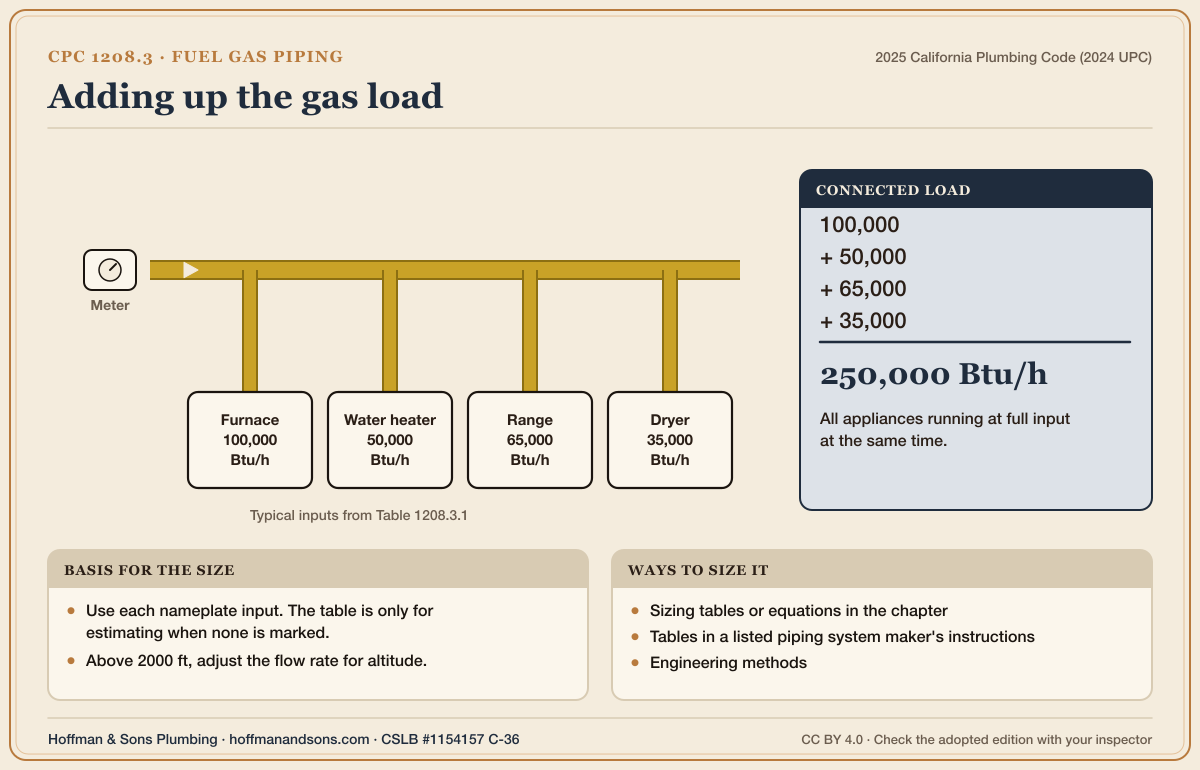
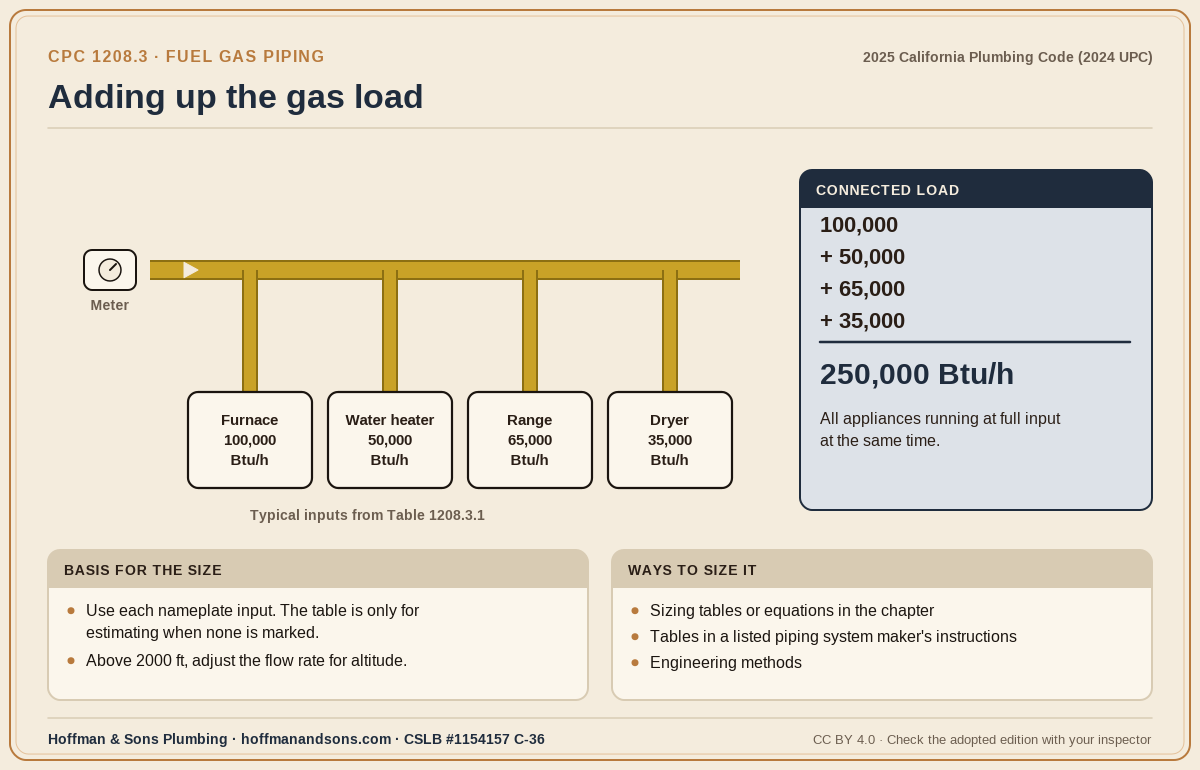
The starting number is the volume of gas the system has to deliver. You add up the maximum input rating of every appliance on the system. Where the input rating isn't shown, you contact the gas supplier, the appliance manufacturer or a qualified agency, or you use the estimates in Table 1208.3.1.
The code sizes for the worst case: all appliances operating at full capacity at the same time. The exception allows sizing from established load diversity factors. Above 2000 feet, the volumetric flow rate gets adjusted for altitude.
The size also has to be right at the far end. The pipe and the appliance connections have to leave the supply pressure at each appliance inlet equal to or greater than the minimum that appliance requires.
You can size from the tables or equations in the chapter, from the sizing tables in a listed piping system maker's instructions, or by engineering methods. Section 1215.1 covers the sizing methods.
On the job
- Use the nameplate input on each appliance, not the table. Table 1208.3.1 is for when the rating isn't marked, and it's only an approximation.
- Add the load before you pick a pipe size. A new tankless water heater is often the item that pushes an older house's gas line past its capacity.
- A remodel that adds a range, a fireplace or an outdoor appliance changes the connected load. Re-check the existing line instead of assuming it's big enough.
- Keep your sizing worksheet or the manufacturer's table with the job. Inspectors ask how the size was determined.
The inspector and your city's adopted edition have the final word.