The rule
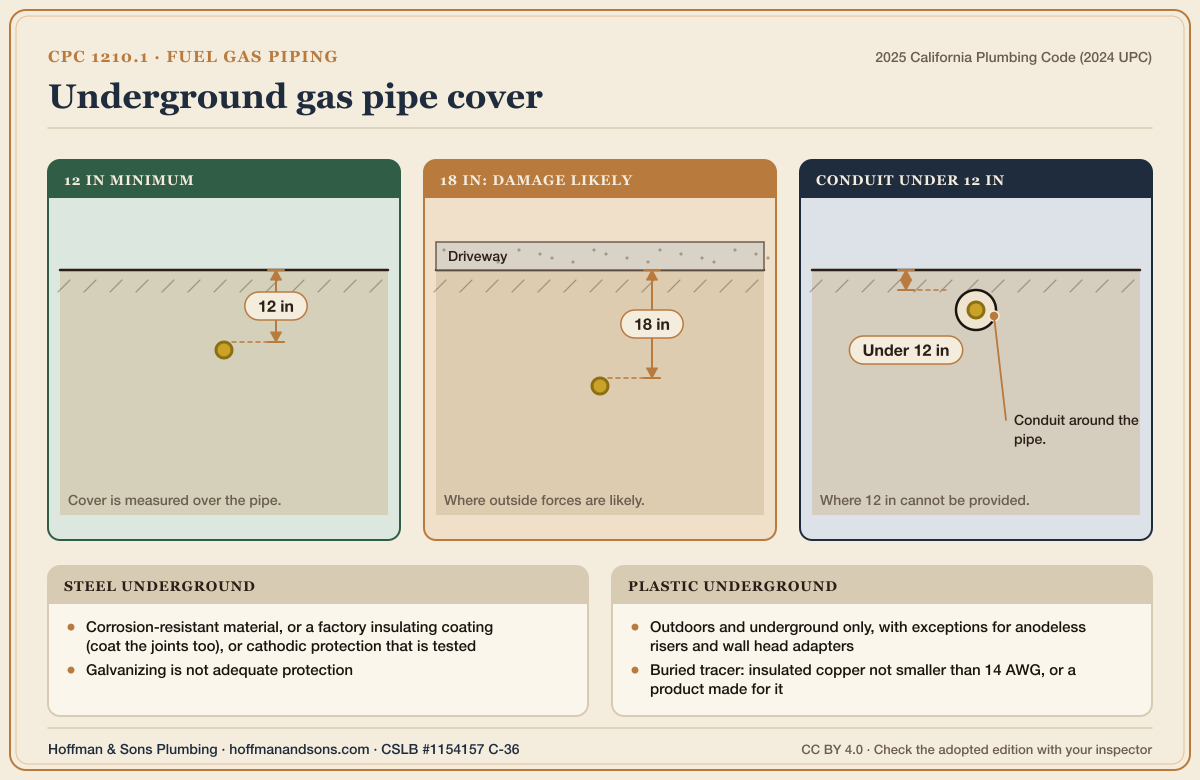
Cover is the dirt over the pipe. The minimum is 12 inches. It goes up to 18 inches where damage from external forces is likely, such as vehicle loads. Where a full 12 inches isn't possible, the piping has to be installed in conduit.
The trench should be graded so the pipe has firm, substantially continuous bearing along the bottom. If you flood the trench to settle the backfill, take care that the pipe isn't floated off its bearing. The pipe also needs clearance from other underground structures so it doesn't touch them and can be maintained, and plastic pipe has to be kept clear of heat sources.
Steel pipe and tubing in the ground has to be protected from corrosion. Zinc coating (galvanizing) isn't considered adequate. Acceptable protection is corrosion-resistant material suitable for the environment, a factory-applied electrically insulating coating with the joints coated too, or a cathodic protection system that's tested and documented. Dissimilar metals joined underground need an insulating coupling or fitting.
Plastic gas piping goes outdoors and underground only, except where an anodeless riser is used or it ends at a wall head adapter. It needs a buried tracer wire, either a product made for the purpose or insulated copper conductor not smaller than 14 AWG. Piping through a foundation wall is sleeved or otherwise protected and sealed, and piping under a building is encased in approved conduit or is a listed piping and encasement system.
On the job
- Measure cover from the top of the pipe to the finished grade you'll end up with, not to today's dirt. Landscaping and driveways change that number.
- Look at the route before you pick 12 or 18. A pipe crossing a driveway or a spot where equipment drives over it is where the 18 inches applies.
- Wrap or coat every field joint on coated steel, per the coating maker's instructions. Missed joints are where underground steel fails.
- Install the tracer wire when the plastic goes in and bring one end up at the building wall or riser, so the line can be located later.
The inspector and your city's adopted edition have the final word.