The rule
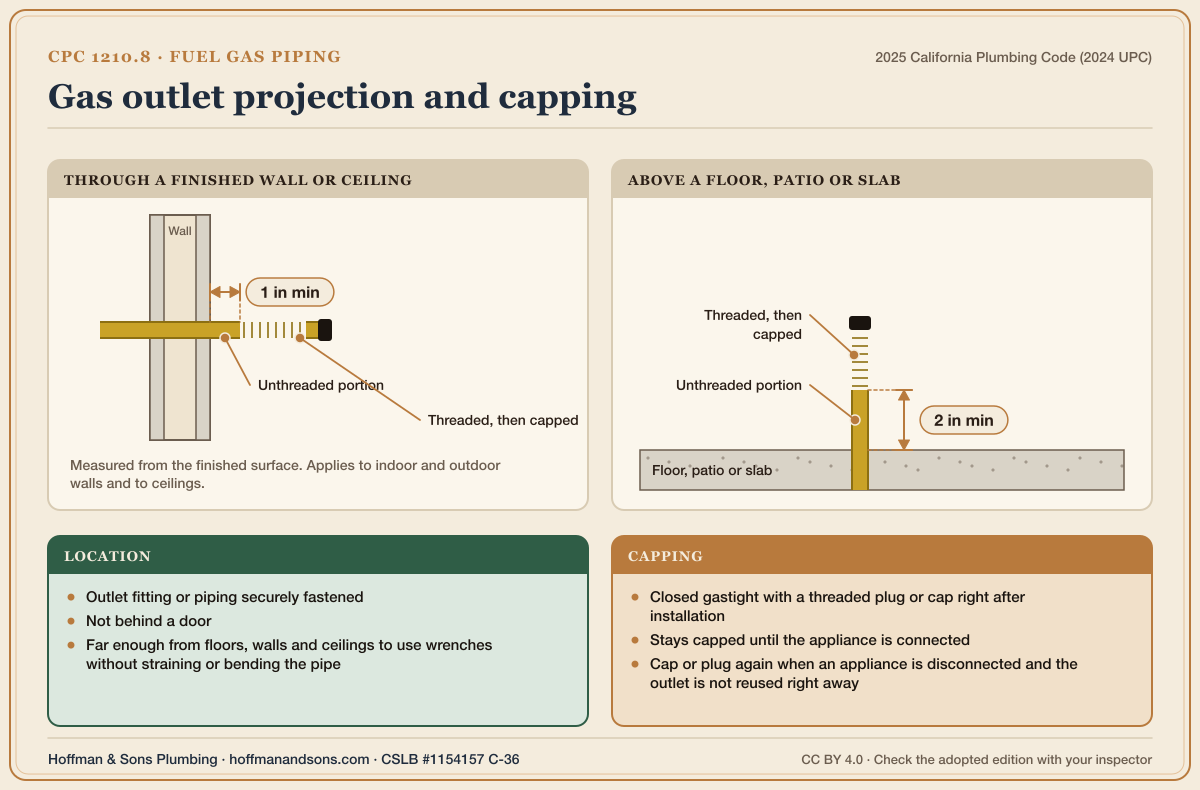
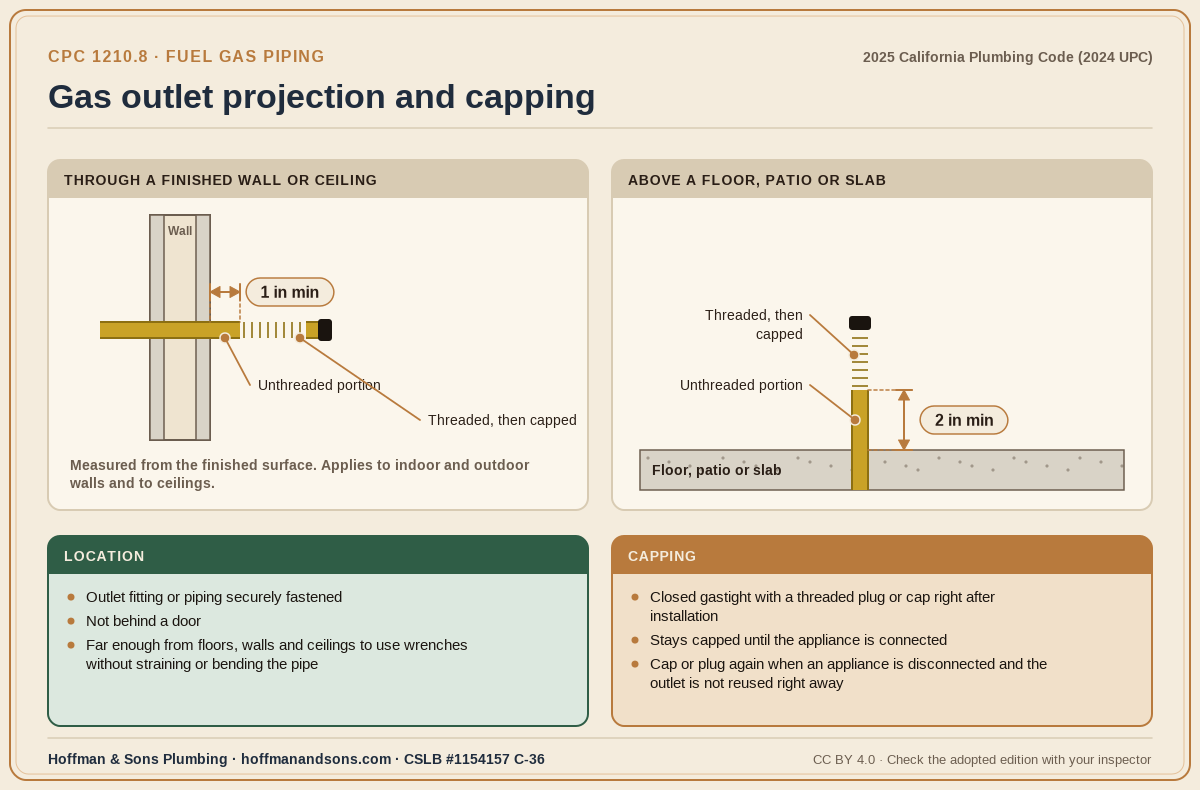
At each gas outlet, the unthreaded portion of the pipe extends not less than 1 inch through a finished ceiling or an indoor or outdoor wall, and not less than 2 inches above the surface of a floor, patio or slab. Quick-disconnect devices of the flush-mounted type and listed gas convenience outlets are exempt and go in per the maker's instructions.
The outlet fitting or piping has to be securely fastened, can't be behind a door, and has to be far enough from the floor, walls, patio, slab or ceiling that you can use wrenches without straining or damaging the piping.
Every outlet, valve included, is closed gastight with a threaded plug or cap right after it's installed and stays closed until the appliance is connected. If an appliance is disconnected and the outlet isn't going to be used right away, it gets capped or plugged gastight again.
An appliance shutoff valve installed in a fireplace gets removed, and the piping capped gastight, where the fireplace burns solid fuel.
On the job
- Cap before the rough inspection, not after. An open outlet fails the pressure test and the inspector knows it.
- Leave unthreaded pipe at the finished face. If the threads start inside the wall, the stub is too short.
- Check door swings before you set a stub-out. A gas stub behind a door gets hit and bent.
- A stub for a future range, dryer or fireplace is capped and stays capped until the appliance gets hooked up.
The inspector and your city's adopted edition have the final word.