The rule
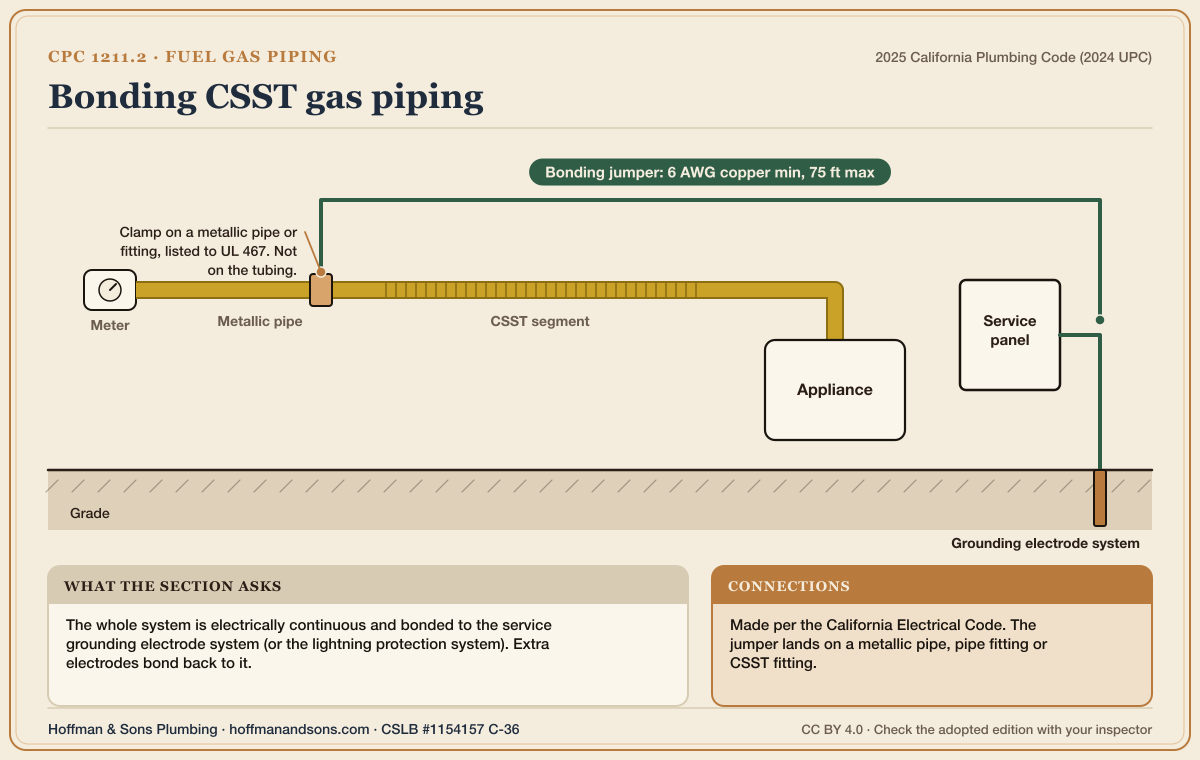
A CSST system, or a gas system that has one or more CSST segments, has to be electrically continuous and bonded to the electrical service grounding electrode system or, where there is one, the lightning protection grounding electrode system.
The bonding jumper connects to a metallic pipe, a pipe fitting or a CSST fitting. It's not smaller than 6 AWG copper wire or the equivalent, and the length between the gas piping connection and the grounding electrode system can't go over 75 feet. If you add grounding electrodes to meet that length, they're bonded to the electrical service grounding electrode system (or the lightning protection system, where provided).
The connections have to follow the California Electrical Code, and the devices used for the bonding connection have to be listed for the application in accordance with UL 467. A listed bonding clamp is what you're looking for, not a hose clamp.
On the job
- Bond to a metallic pipe or fitting, not to the CSST jacket or the corrugated tubing itself.
- Measure the run to the electrode before you buy wire. If it's close to 75 feet, move the connection point or add an electrode.
- Use a clamp that's listed to UL 467 and made for the pipe it's on. Inspectors look at the clamp.
- Coordinate with the electrician. The bonding has to land on the service grounding electrode system, and the connections follow the California Electrical Code.
The inspector and your city's adopted edition have the final word.