The rule
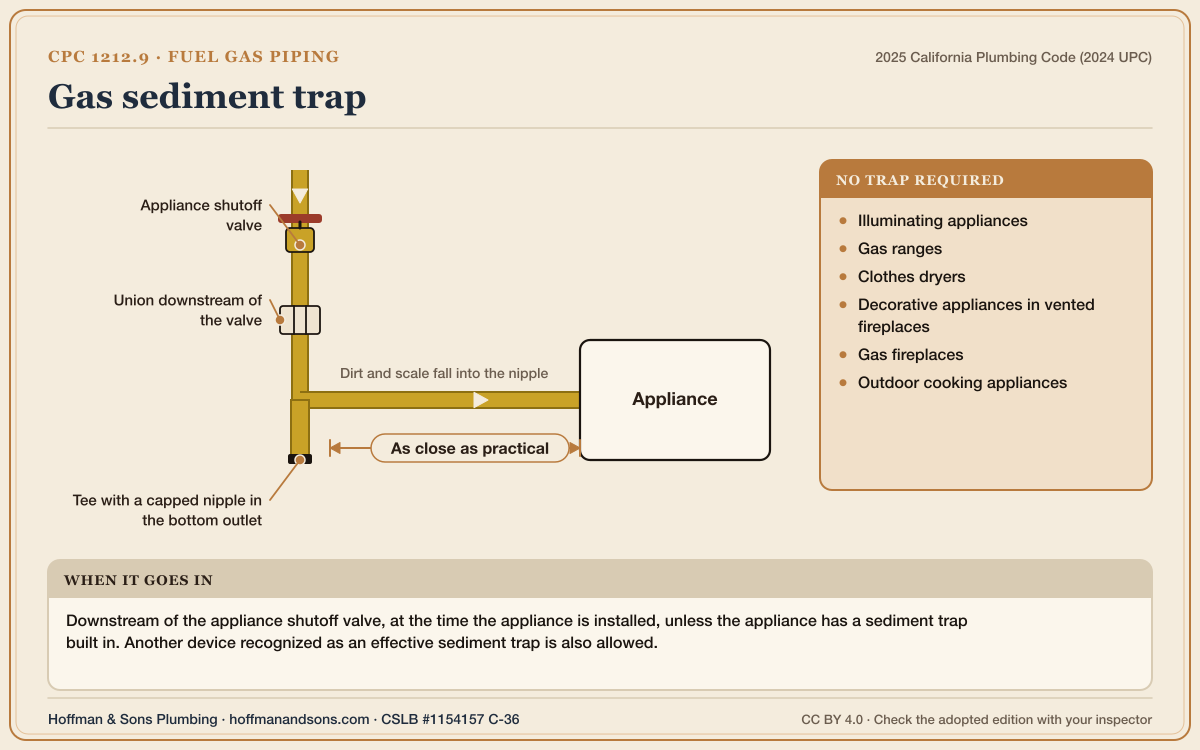
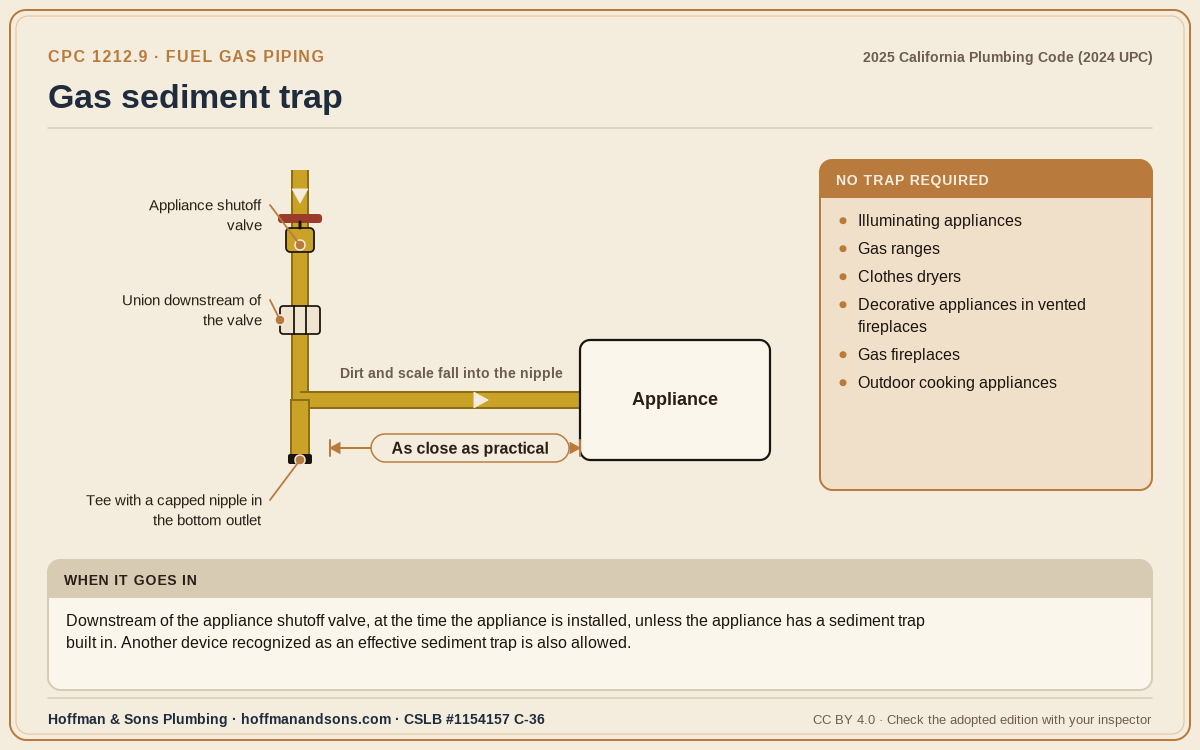
Where the appliance doesn't have a sediment trap built in, one is installed downstream of the appliance shutoff valve and as close to the appliance's inlet as practical, at the time the appliance is installed. It catches dirt, scale and moisture before they reach the appliance's controls.
The trap is a tee fitting with a capped nipple in the bottom outlet (Figure 1212.9), or another device recognized as an effective sediment trap.
Several appliances don't need one: illuminating appliances, gas ranges, clothes dryers, decorative appliances for installation in vented fireplaces, gas fireplaces, and outdoor cooking appliances.
On the job
- On a water heater or furnace, put the trap right at the appliance, after the valve and union, and bring the appliance connection out of the side of the tee so debris falls into the nipple.
- Skip the trap on a range or dryer. Adding one there isn't needed and takes space.
- Cap the nipple gastight. A leaking cap on the bottom of a trap is an easy thing to miss on the pressure test.
- Check manufacturer's instructions for the appliance. Some require a trap even where the code doesn't, or give a specific nipple length.
The inspector and your city's adopted edition have the final word.