The rule
The code gives you three ways to work out the size of each segment of gas pipe. In every case the diameter comes from the pipe sizing tables in Section 1215.2 or the equations in Section 1215.3.
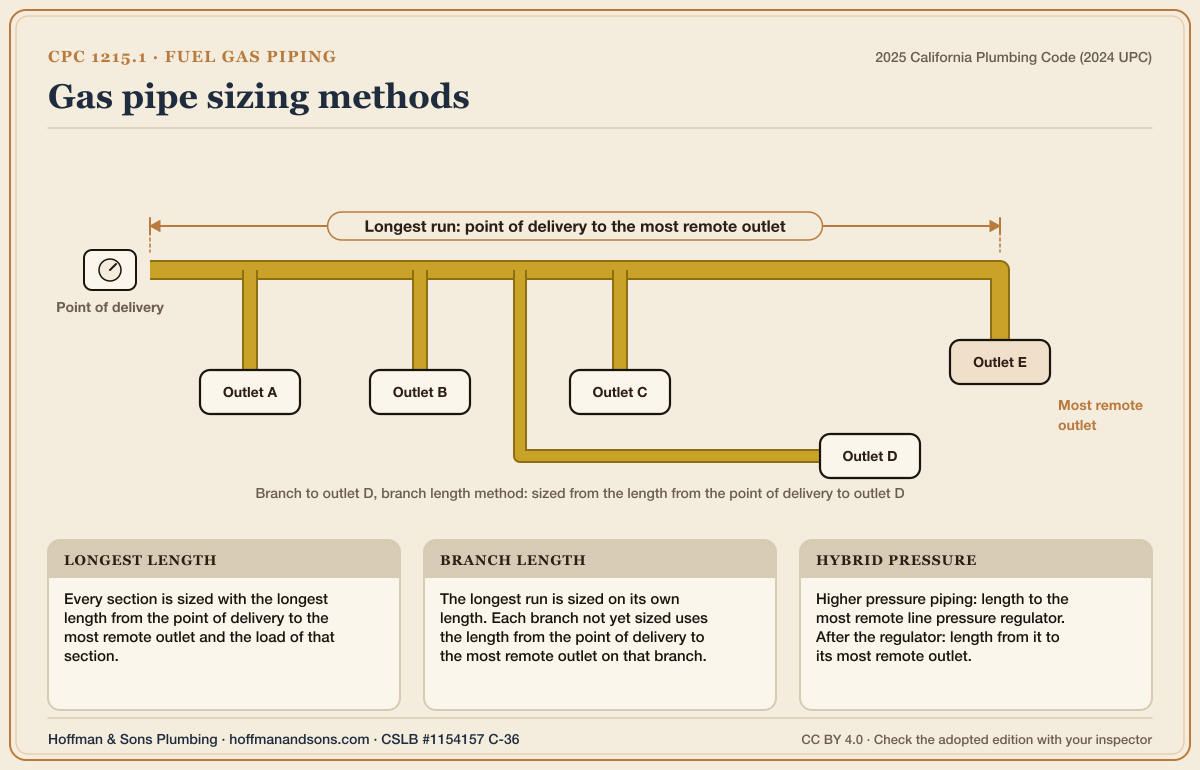
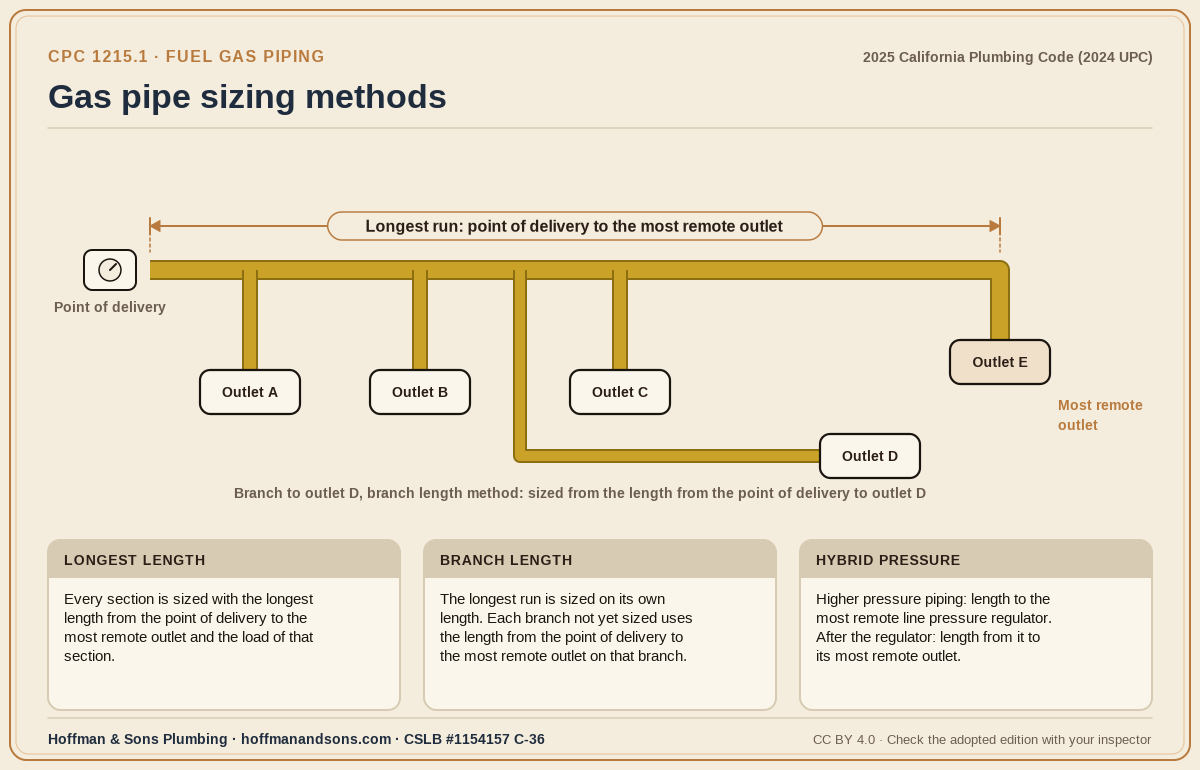
Longest length method: you take the longest length of piping from the point of delivery to the most remote outlet, and use that length with the load of each section to size it.
Branch length method: you size the longest run from the point of delivery to the most remote outlet using that longest run and each section's load. Then each branch not yet sized is sized using the length from the point of delivery to the most remote outlet on that branch, and the load of the section.
Hybrid pressure method: for higher pressure piping, you size each section using the longest length from the point of delivery to the most remote line pressure regulator. From the line pressure regulator to each outlet, you use the length from the regulator to the most remote outlet it serves.
On the job
- Pick the method and write it down on the plans. Mixing methods in one system confuses the check.
- The longest length method is the conservative one and usually yields larger pipe. The branch length method can allow smaller branches, which is why designers like it.
- Measure to the most remote outlet, not the nearest one. For the hybrid method, measure to the most remote line pressure regulator on the high pressure side.
- When the sizing is in a manufacturer's table (for CSST, for example), use their method and tables, not these.
The inspector and your city's adopted edition have the final word.