The rule
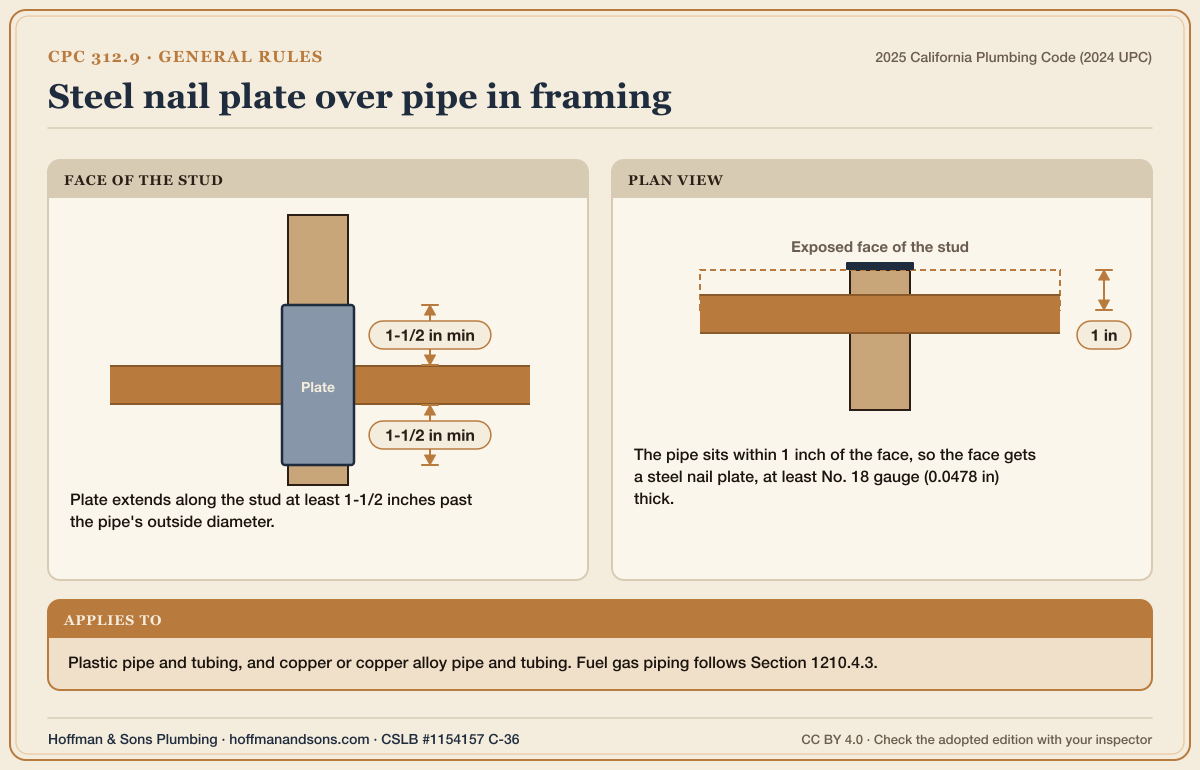
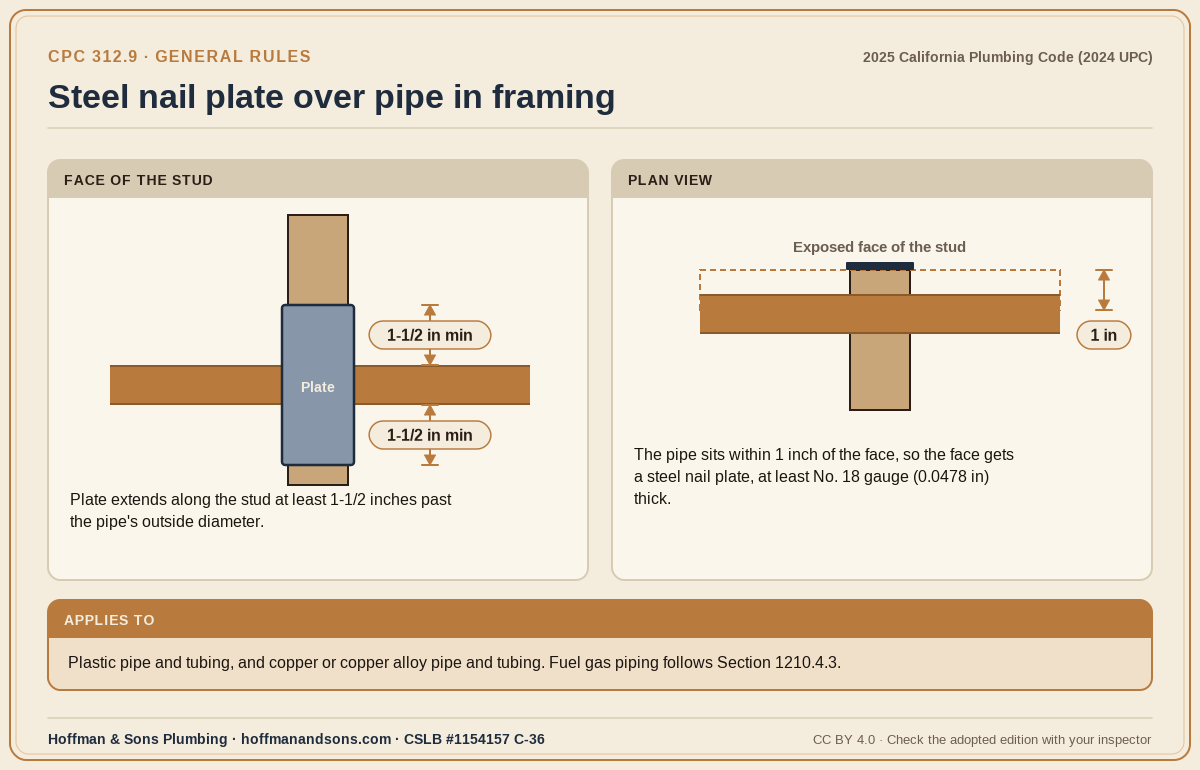
When you bore a stud or plate and the pipe ends up within 1 inch of the face where drywall or sheathing will be fastened, a nail or screw can reach it. The code wants a steel plate over that spot.
The rule names plastic pipe or tubing, and copper or copper alloy pipe or tubing. The plate has to be steel, at least No. 18 gauge (0.0478 inch) thick, and it has to extend along the framing member at least 1-1/2 inches beyond the outside diameter of the pipe.
Fuel gas piping has its own protection rules in Section 1210.4.3, so don't use this section as the gas rule.
On the job
- Plates go on before the wall is covered, and they're a standard rough-in inspection item. A pipe with the face within an inch and no plate is an easy correction.
- Where you can, bore deeper into the framing so the pipe sits farther back than 1 inch from the face. Fewer plates, fewer chances for a missed one.
- Check the extension on both sides of the pipe. The plate has to run past the pipe's outside diameter by at least 1-1/2 inches, so a small cut-off scrap won't do.
The inspector and your city's adopted edition have the final word.