The rule
Where 602.2 is about pipe-to-pipe connections, 602.3 is about the fixtures and equipment themselves. If a fixture, device or construction can pollute the supply, or can link the drinking water to water that has become contaminated, it needs an approved backflow device for that hazard.
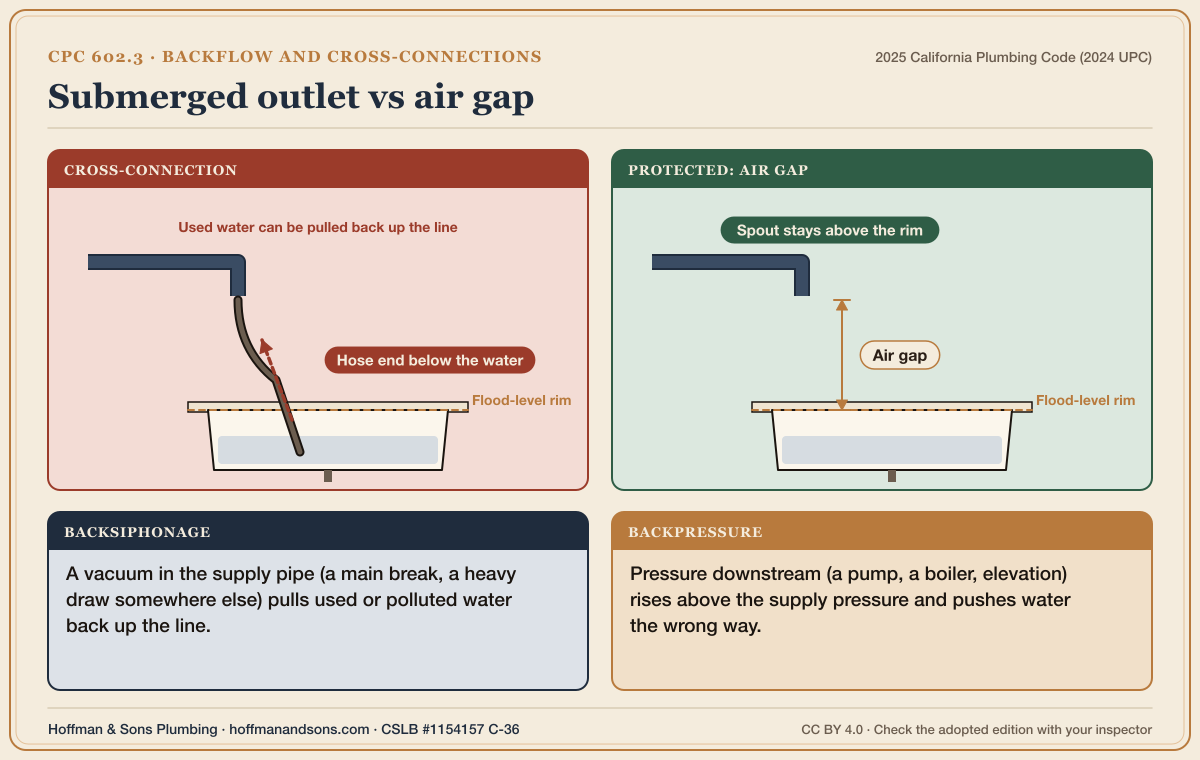
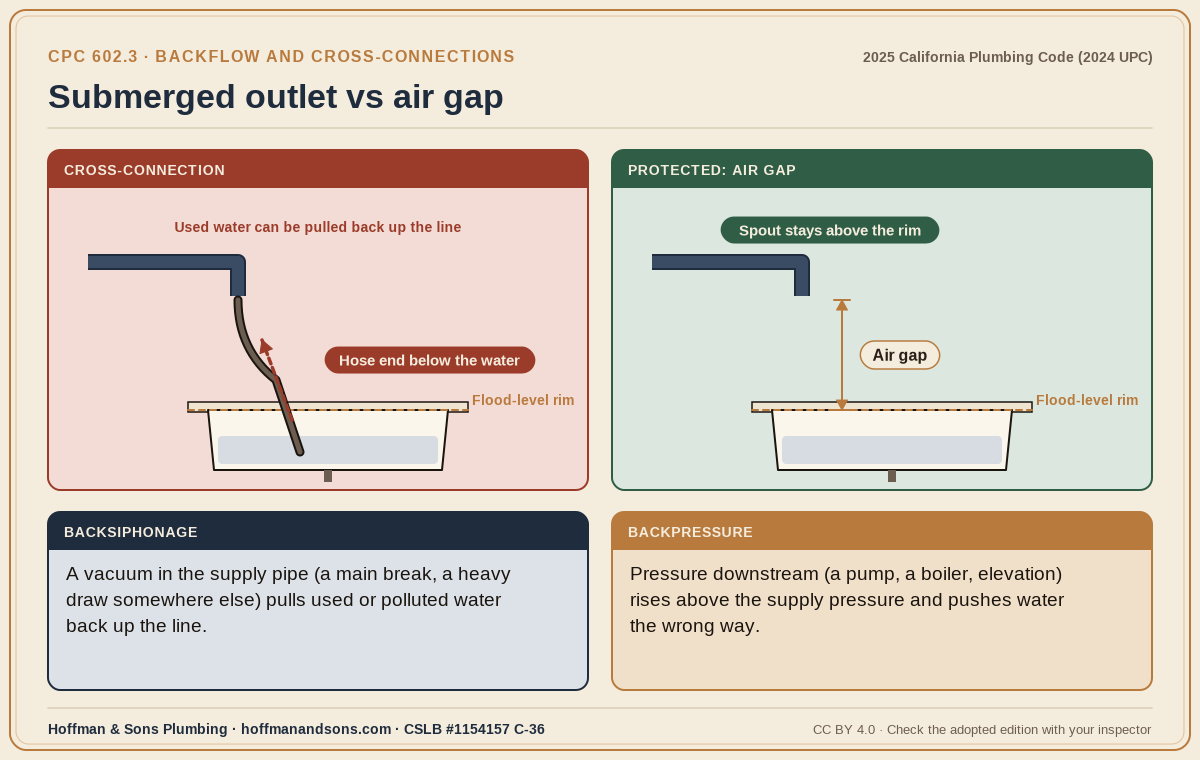
Backflow happens two ways. Backsiphonage is a vacuum in the supply pipe (a main break, a big draw, a shutdown) pulling used water back up the line. Backpressure is something downstream, like a pump or boiler, pushing harder than the supply does. A device that stops one doesn't always stop the other, which is why Table 603.2 lists both.
The simplest protection is built into the fixture: the faucet or fill outlet stays above the flood-level rim, with open air between. Where that can't be guaranteed, the supply needs a device.
On the job
- Check the spout height on utility sinks, mop sinks and laundry trays. A hose threaded onto a faucet and dropped into the sink is the usual way a submerged outlet gets created.
- For equipment with a fill connection you didn't buy (a customer-supplied machine, a water feature, a tank), look for an air gap or a built-in device before you tie in.
- If you can't tell the hazard level, treat it as the worse one and ask the inspector before you buy the assembly.
The inspector and your city's adopted edition have the final word.