The rule
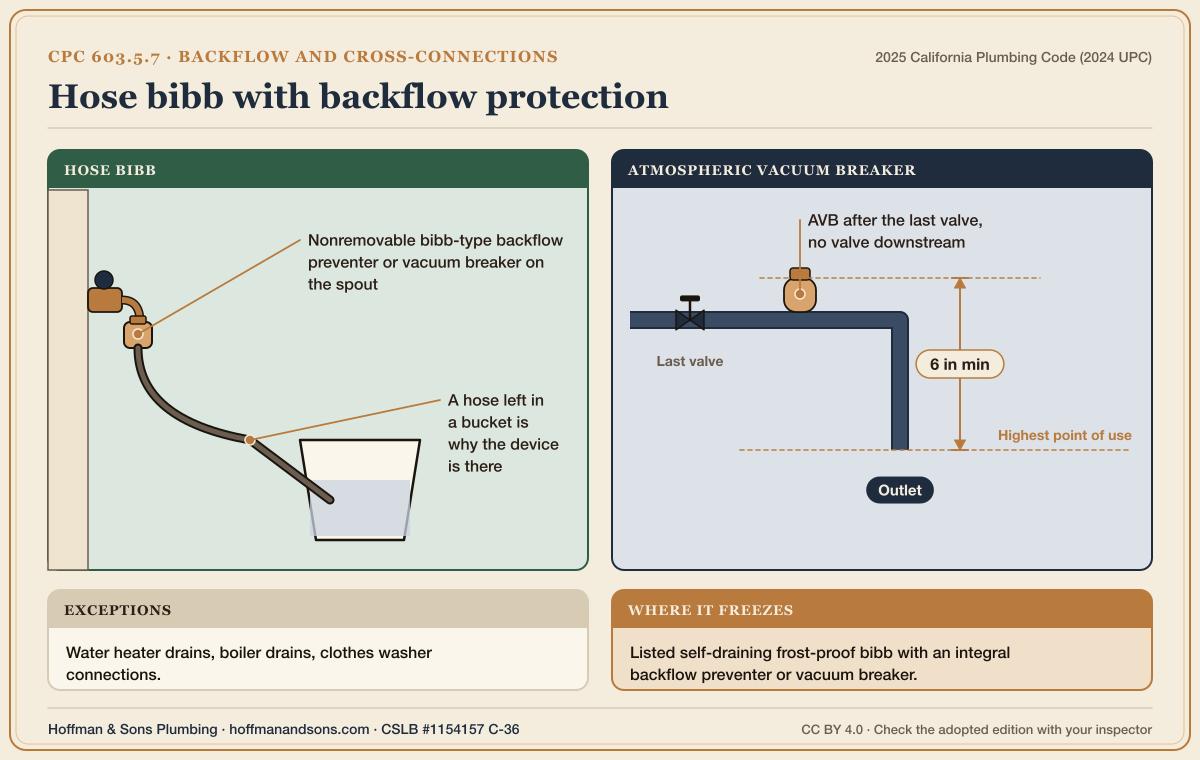
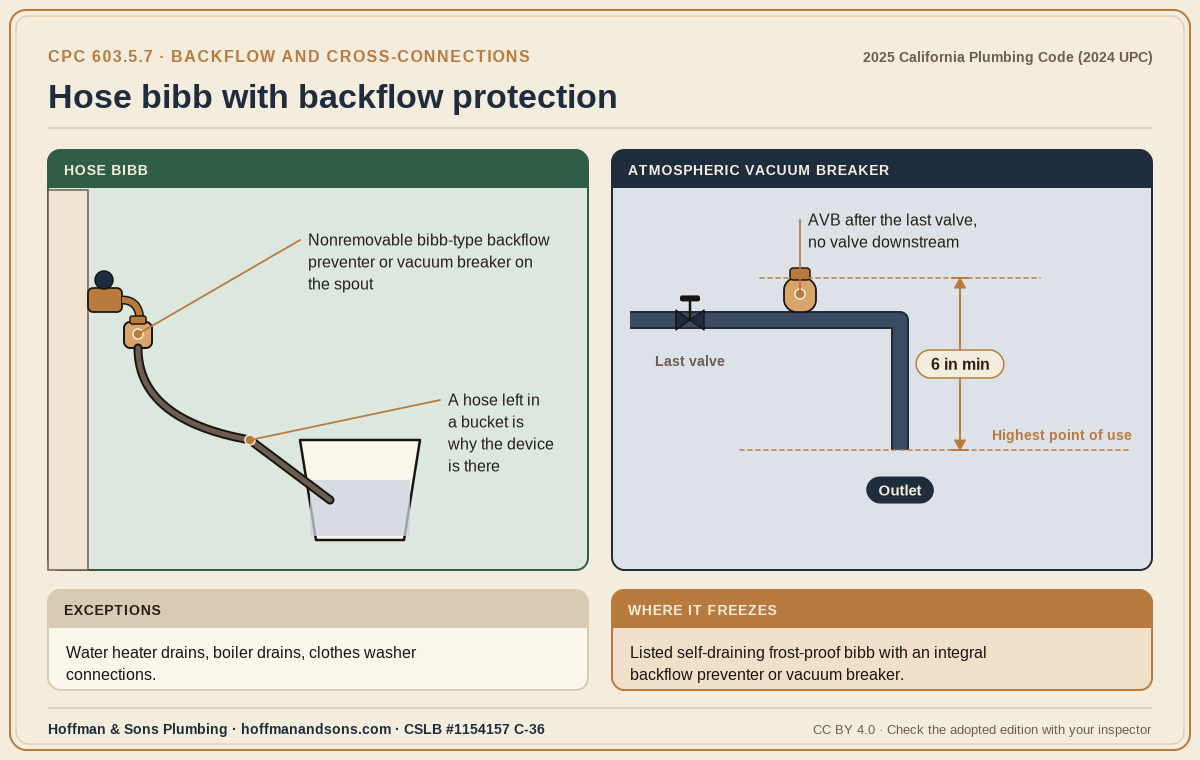
Any potable outlet that takes a hose can put the hose end into something nasty: a bucket of cleaner, a pool, a sprayer with chemicals. If the pressure drops, that gets pulled back into the line. Those outlets need protection.
The options are a nonremovable hose-bibb type backflow preventer, a nonremovable hose-bibb type vacuum breaker, or an atmospheric vacuum breaker. The AVB has to be installed at least 6 inches above the highest point where the water is used, and on the discharge side of the last valve, so there's no valve between the breaker and the hose.
The exceptions are water heater drains, boiler drains and clothes washer connections. In climates where freezing happens, use a listed self-draining frost-proof hose bibb with an integral backflow preventer or vacuum breaker.
On the job
- Many hose bibbs come with the breaker built in. Leave the little vent cap alone. Don't swap in a bibb without one.
- Nonremovable matters. A threaded-on breaker that can be unscrewed doesn't meet it, so the type of breaker has to be a bibb type that can't be removed, or set up that way.
- Utility sinks with a threaded spout need a breaker too. Check the install height against the highest point the hose could reach.
- Washer boxes, water heater drains and boiler drains are the listed exceptions, but don't let a hose reach water you'd rather not drink.
The inspector and your city's adopted edition have the final word.