The rule
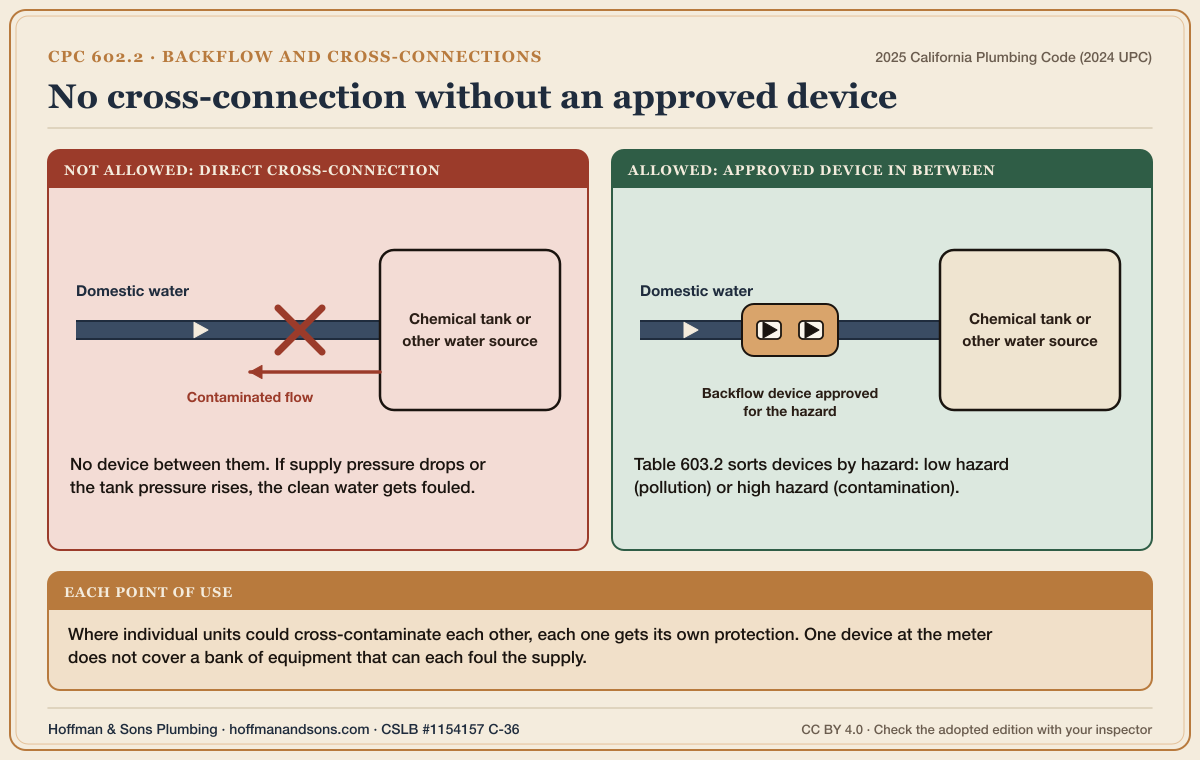
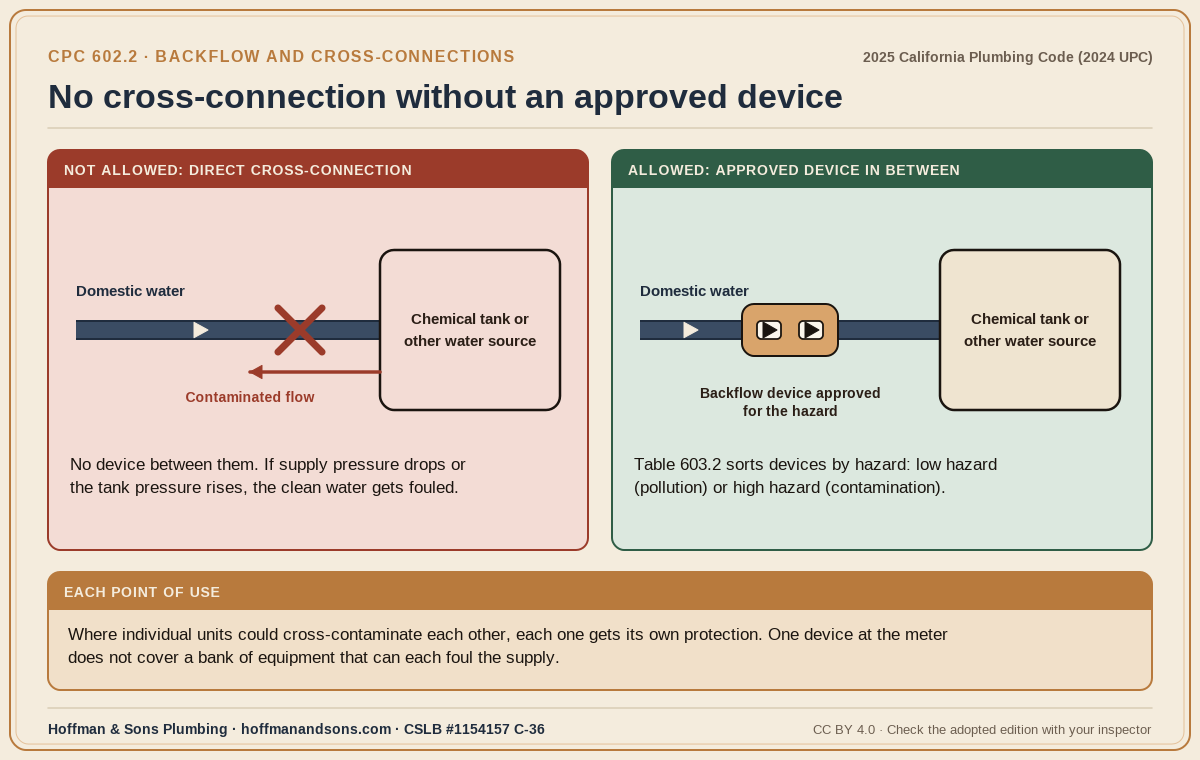
This is the rule behind every backflow device on a job. If a pipe that carries drinking water touches a pipe, tank or fixture holding anything else (a well or other water source, water that's already been used, a chemical, a gas), contamination can travel backward into the clean side. The code bans that connection outright, with one way out: a backflow prevention device approved for the hazard involved, and kept maintained.
The second sentence is the one that catches people. Where individual units could cross-contaminate each other, each point of use is protected separately. One assembly at the meter doesn't cover a bank of equipment that can each foul the supply on its own.
The device has to match the hazard. A low-hazard pollutant and a high-hazard contaminant don't call for the same assembly, and Table 603.2 is where you sort that out.
On the job
- Walk the job looking for anything with a water supply on one side and something else on the other: boilers, chemical feeders, hose connections, tanks, equipment with its own process water. Each one is a possible cross-connection.
- On a remodel, check what the previous plumber tied together. Two water sources teed into one line, or a cross-over to a nonpotable system, gets flagged immediately.
- Decide the protection per point of use before rough-in, not after. Adding an assembly later means finding room, access and a drain for it.
The inspector and your city's adopted edition have the final word.