The rule
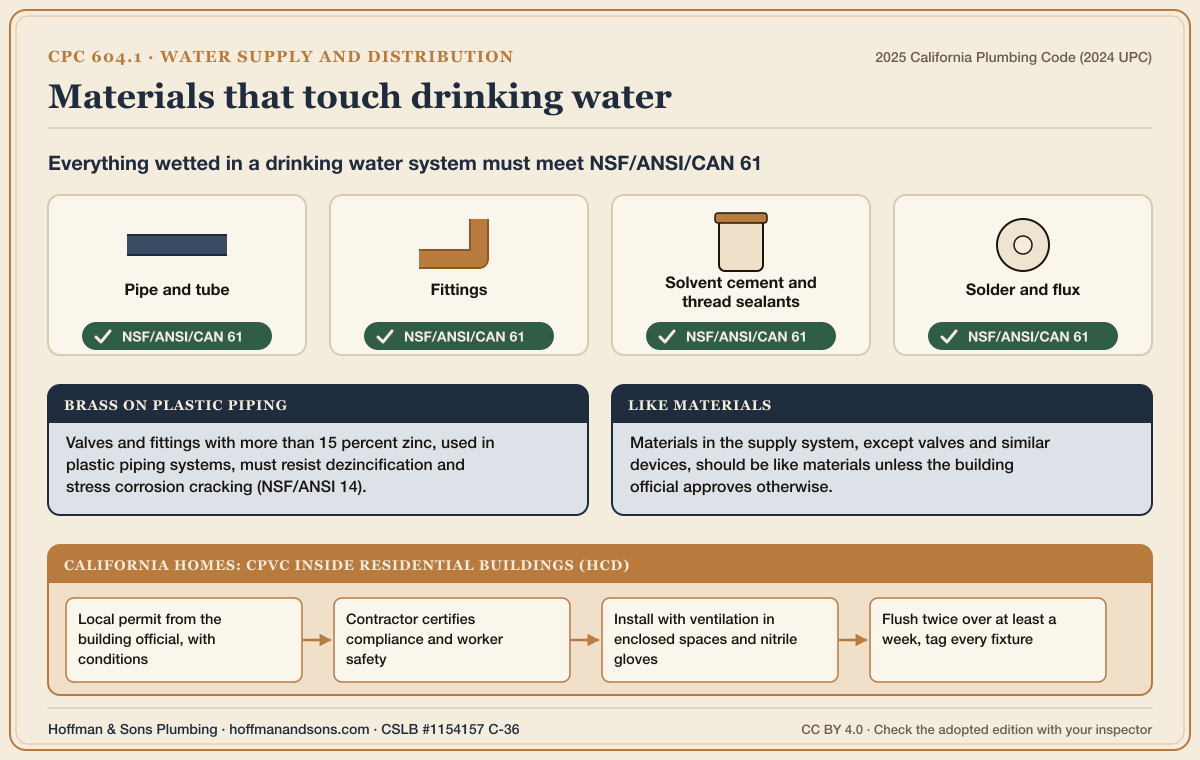
Anything that touches drinking water has to be certified for it. Pipe, tube, fittings, solvent cement, thread sealants, solders and flux all fall under NSF/ANSI/CAN 61. The standards that building supply and water distribution pipe and fittings have to meet are listed in Table 604.1.
Copper-alloy fittings and valves with more than 15 percent zinc that are used on plastic piping have to resist dezincification and stress corrosion cracking, per NSF/ANSI 14. Apart from valves and similar devices, the materials in a water supply system should be like materials unless the building official approves something else.
For homes, California lets the local building official authorize CPVC for hot and cold water inside residential buildings by permit, but only when the conditions are met. The contractor certifies compliance and worker safety, installers use ventilation in enclosed spaces and nitrile gloves, and the system gets flushed twice over at least a week with tags on the fixtures. New PEX has its own flush rule (see 604.1.2).
On the job
- Look for the drinking water certification marking on fittings, valves and cements before they go into the wall. Solder, flux and thread sealant count too.
- Mixing metals is where like-material problems start. Where you do change materials, look at the dielectric requirements in 605.15 first.
- For CPVC in a California home, sort out the permit conditions and the contractor's written certification before rough-in, and plan the fill, tag and flush so the final isn't waiting on the one-week stand.
The inspector and your city's adopted edition have the final word.