The rule
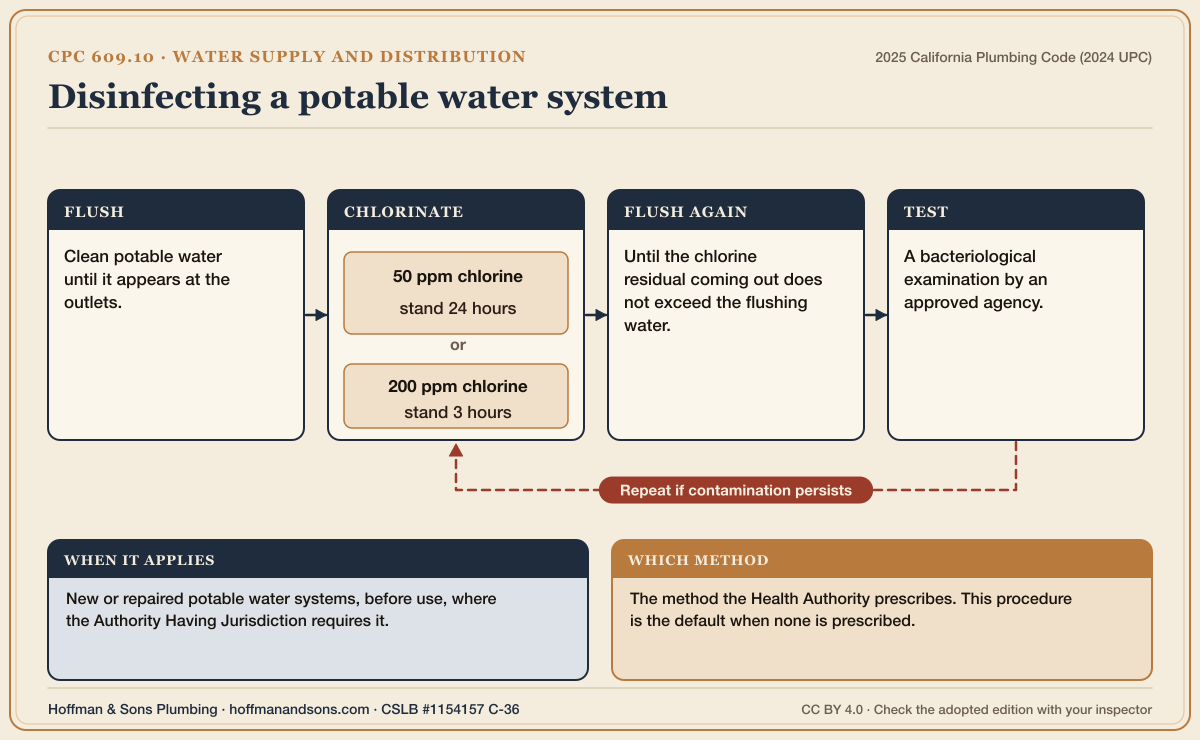
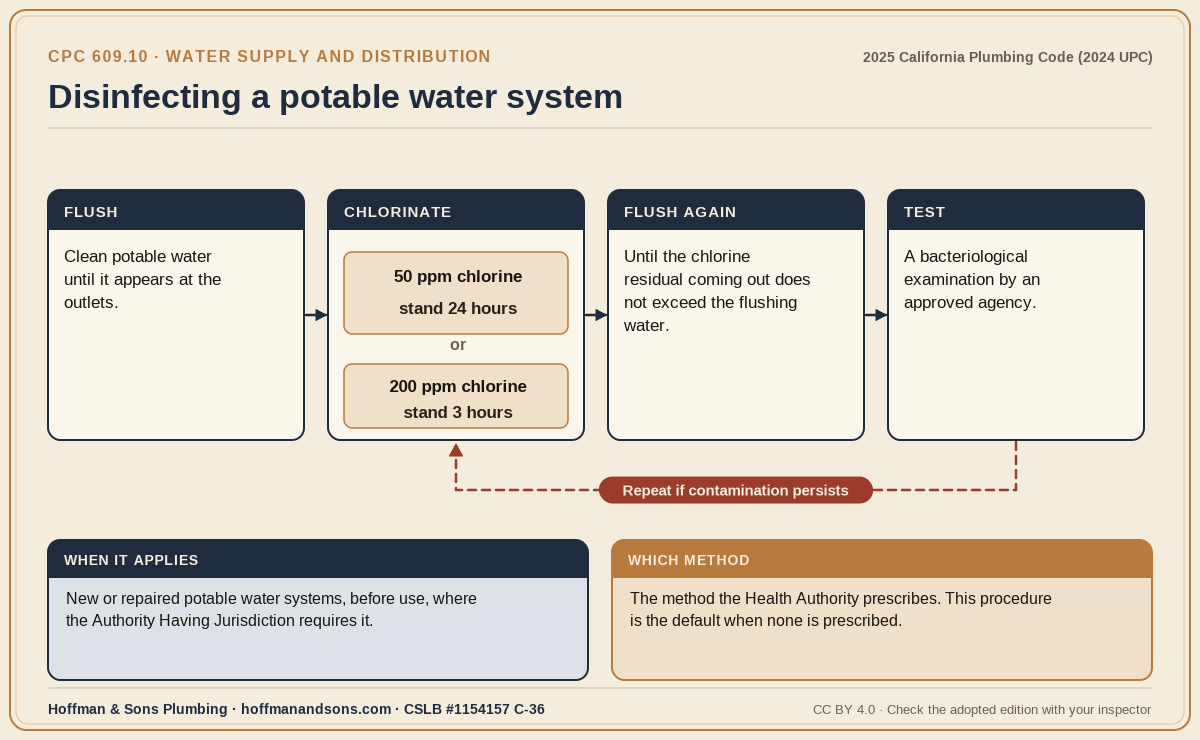
New or repaired potable water systems have to be disinfected before use where the Authority Having Jurisdiction requires it. The method is the one the Health Authority prescribes. If none is prescribed, the code gives a default procedure.
Step one: flush with clean potable water until it comes out at the outlets. Step two: fill the system, or the part you're treating, with a water-chlorine solution of at least 50 parts per million and valve it off for 24 hours, or use at least 200 parts per million and leave it for 3 hours.
Step three: after the standing time, flush with clean potable water until the chlorine residual coming out is no higher than the residual in the flushing water. Step four: repeat the whole procedure if a bacteriological examination by an approved agency shows contamination persists.
On the job
- Ask the building department early whether disinfection is required on the job and what method the health authority prescribes. That answer decides everything else.
- Valve off the section you're treating so the chlorine stays where it's supposed to be and doesn't backflow into the main.
- Plan the discharge of the chlorinated water so it doesn't end up in the landscape or a storm drain. Check how the local agency wants it handled.
The inspector and your city's adopted edition have the final word.