The rule
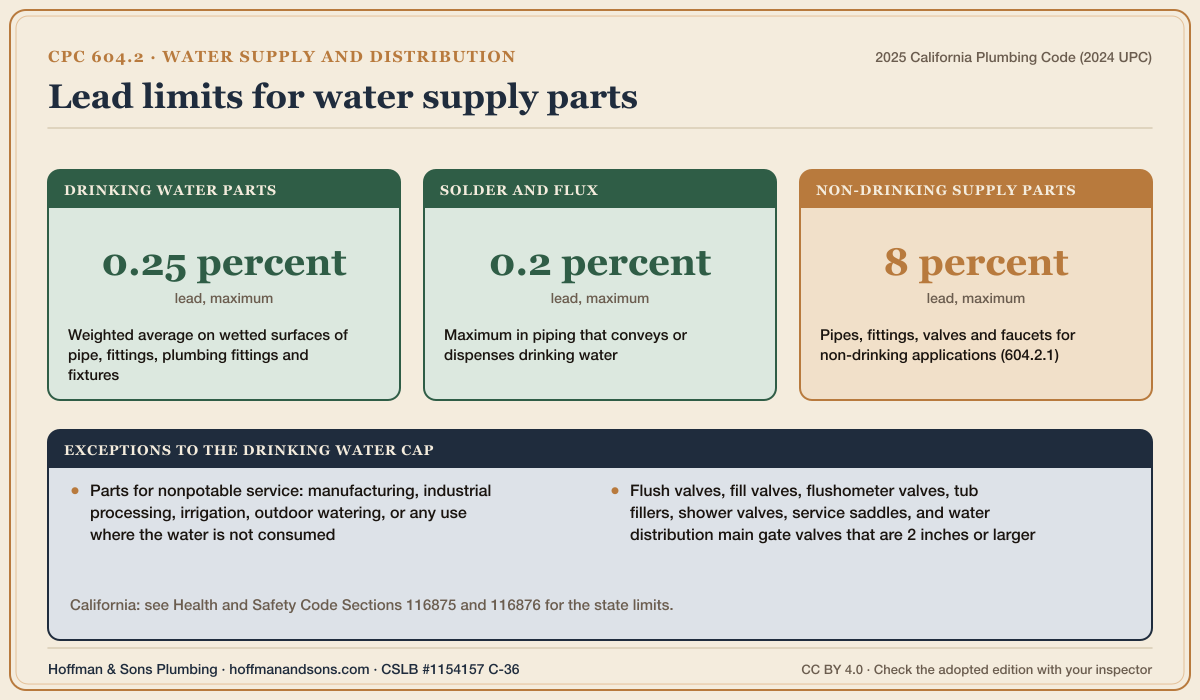
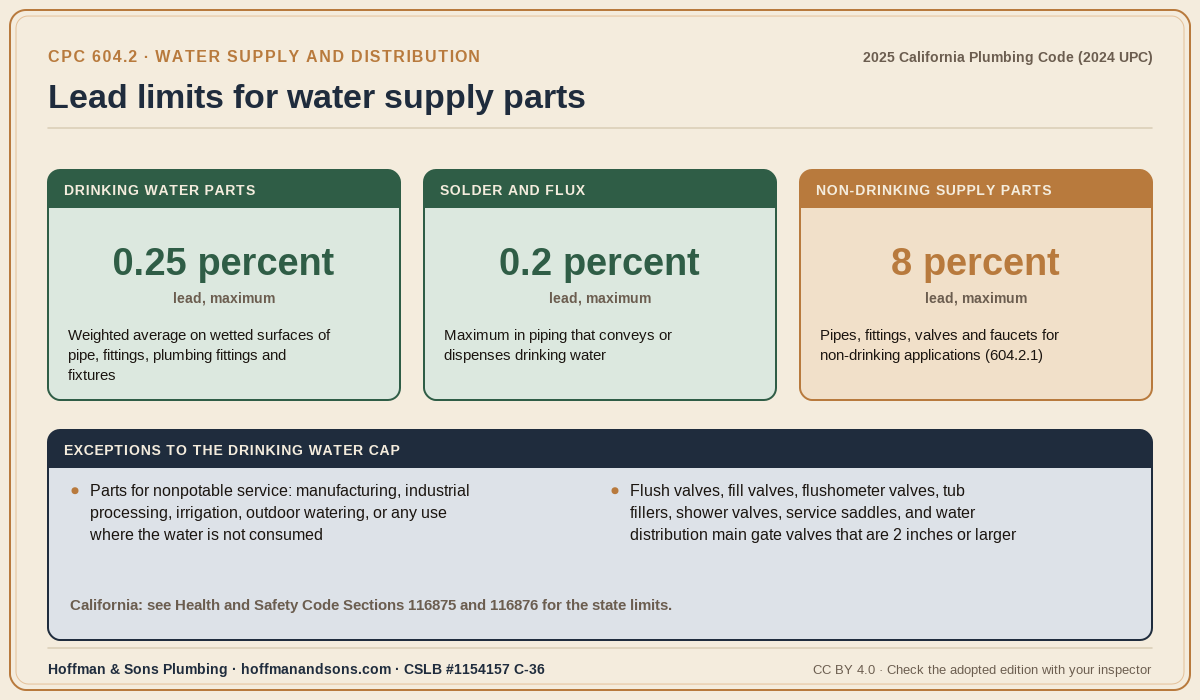
For anything that conveys or dispenses water for human consumption, the lead in the wetted surfaces of pipe, pipe fittings, plumbing fittings and fixtures has to average no more than 0.25 percent, weighted. Solder and flux used in those systems are held to 0.2 percent or less.
There are exceptions for parts used for nonpotable service (manufacturing, industrial processing, irrigation, outdoor watering, or any use where the water isn't consumed) and for flush valves, fill valves, flushometer valves, tub fillers, shower valves, service saddles and water distribution main gate valves that are 2 inches or larger.
Pipes, fittings, valves and faucets in the water supply system that are for non-drinking applications can have up to 8 percent lead (604.2.1). That's a separate, looser cap, so those parts have no place on the drinking water side.
On the job
- Use lead-free solder and flux on every drinking water joint. The cap on solder and flux is 0.2 percent.
- Parts made for nonpotable service (irrigation, industrial) are exempt from the drinking water cap. Keep them off the drinking water side of the system.
- Keep the packaging or markings on fittings, valves and faucets until the job is signed off, in case a question comes up about what a part is rated for.
The inspector and your city's adopted edition have the final word.