The rule
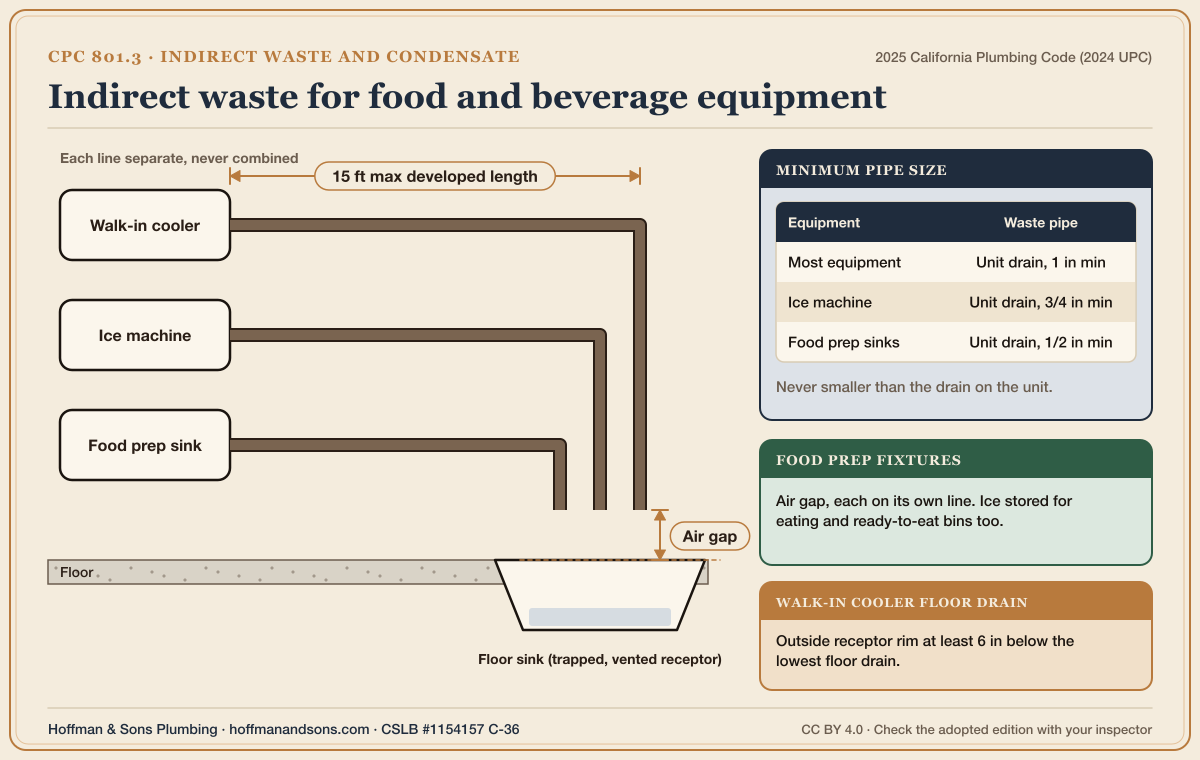
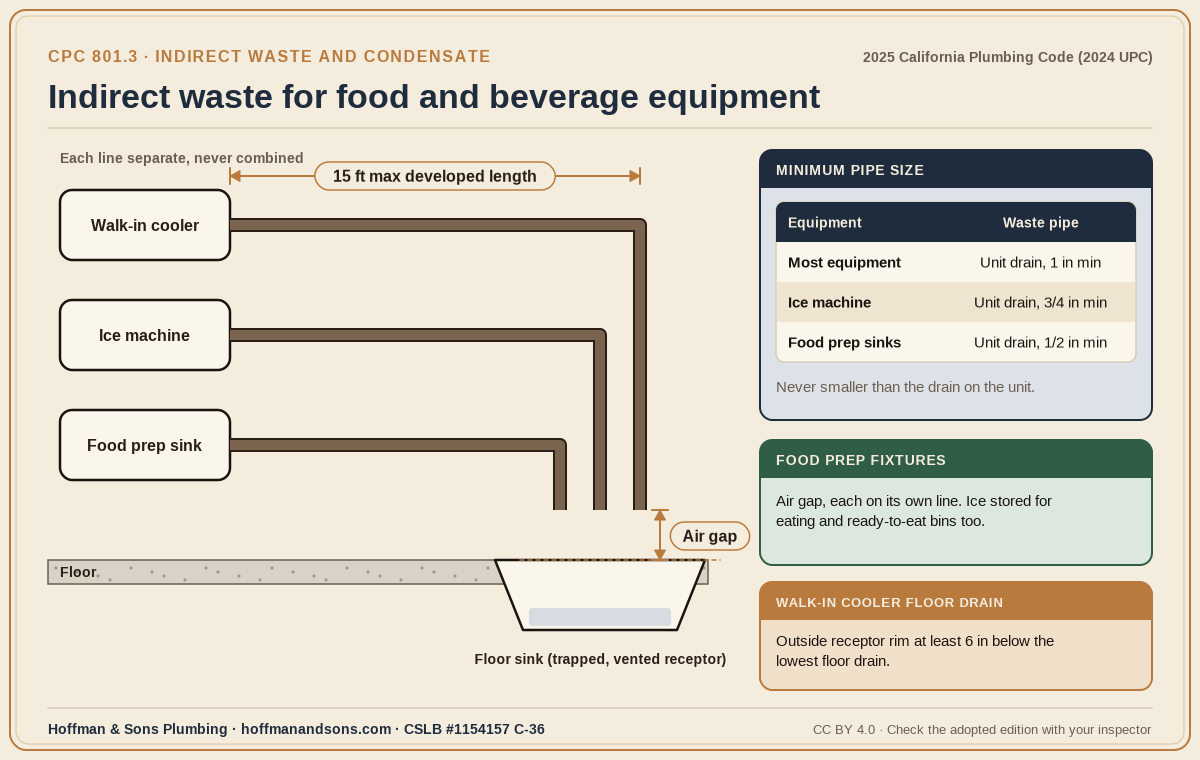
Food and beverage establishments (storing, preparing, serving or processing) have to pipe the drains from refrigerators, refrigeration coils, freezers, walk-in coolers, iceboxes, ice makers, steam tables, egg boilers, coffee urns and brewers, drink dispensers and similar equipment as indirect waste.
Size the pipe at least as large as the unit's drain, and not under 1 inch. Refrigeration coils and ice machines get their own rule: not less than the drain on the unit, and in no case less than 3/4 inch for an ice machine. Keep the developed length to 15 feet or less.
Food-preparation sinks, steam kettles, potato peelers, ice cream dipper wells, and bins or equipment that store unpackaged ice or touch ready-to-eat food must connect through an air gap. Each of these has its own separate indirect waste line to the receptor, never combined with another, and not smaller than the unit's drain or 1/2 inch.
Walk-in coolers can have floor drains on a separate drainage line running to an outside receptor, if the receptor's flood-level rim is at least 6 inches below the lowest floor drain, the drains are trapped and individually vented, and there are cleanouts at 90 degree turns.
On the job
- Get the equipment cut sheets early. The drain size and any required air gap are right on them, and the kitchen designer's layout decides where the floor sinks have to go.
- Count the developed length, not the straight-line distance. Every elbow adds to the run, and 15 feet goes fast between a back-of-house cooler and the nearest floor sink.
- Don't combine two food-handling fixtures into one indirect waste line. Each one is piped separately to the receptor.
- Order the floor sinks and the equipment together. The receptor locations decide how long each indirect line runs, and 15 feet is the limit.
The inspector and your city's adopted edition have the final word.