The rule
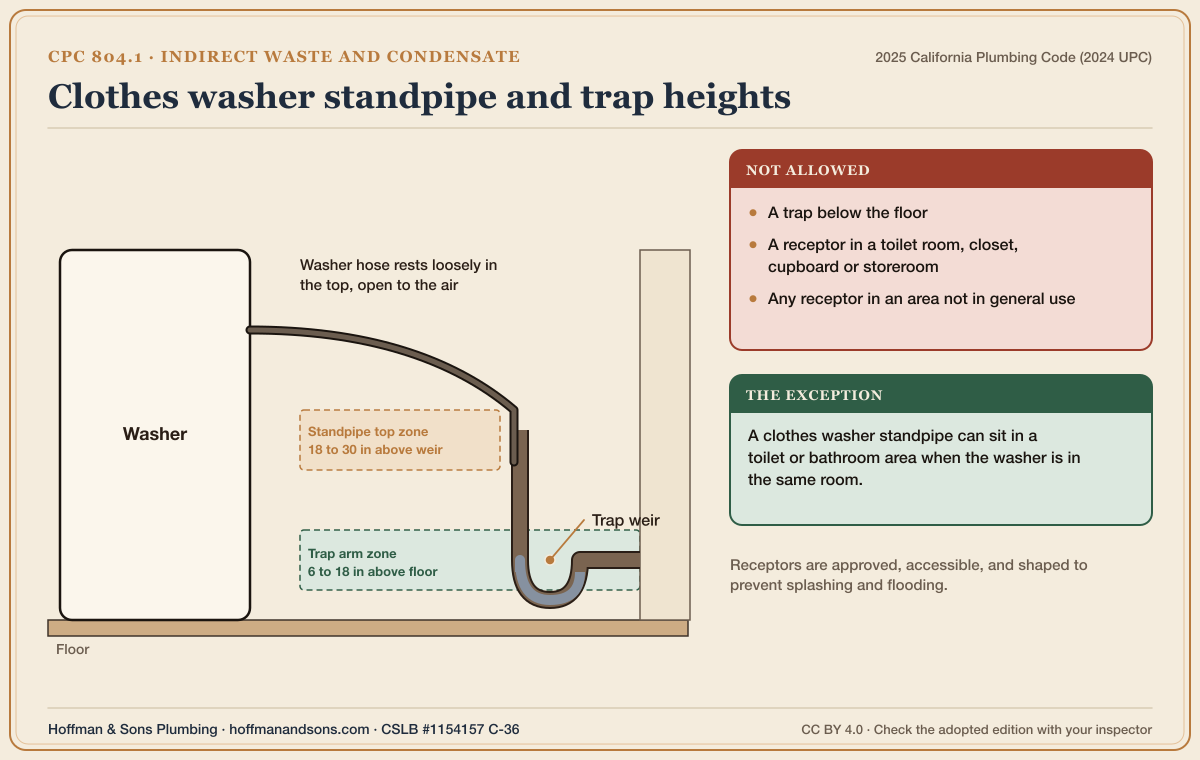
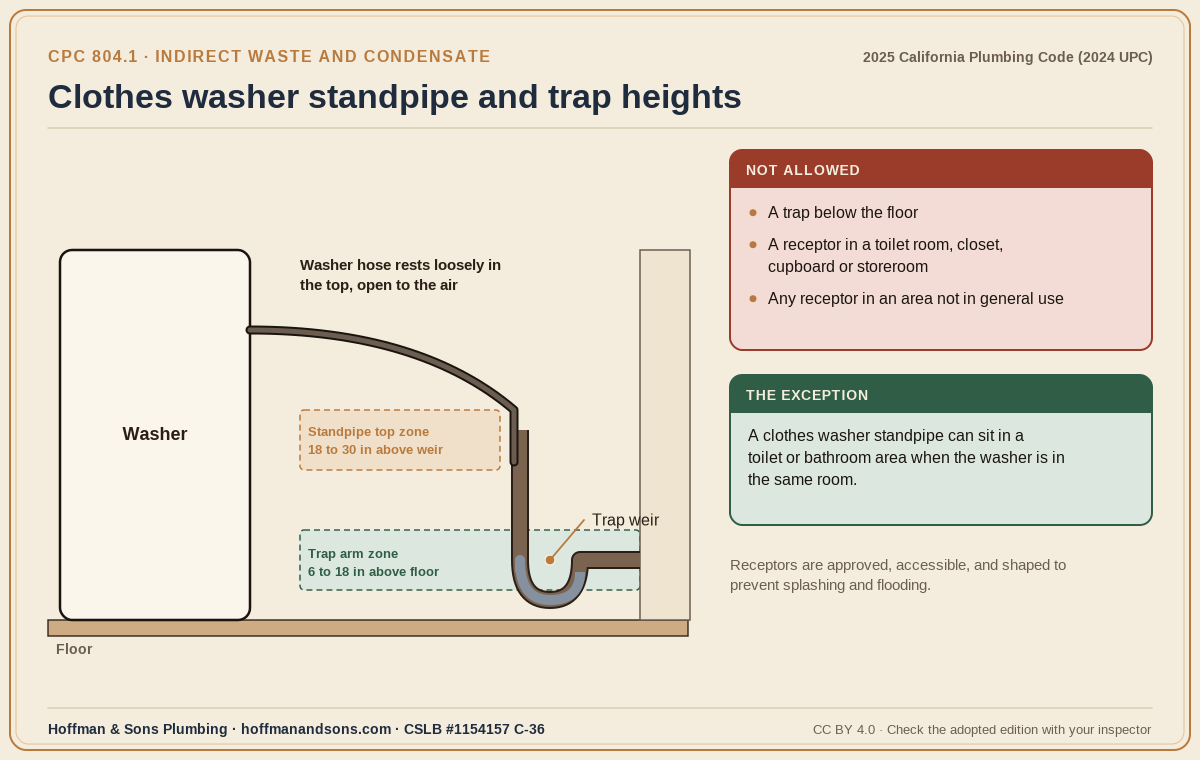
Any fixture or receptor that takes an indirect waste has to be approved for the job, shaped and sized to prevent splashing or flooding, and in a spot where it can be inspected and cleaned.
For a clothes washer standpipe, the top has to be at least 18 inches and no more than 30 inches above the trap weir. The trap can't go under the floor. It's roughed in at least 6 inches and no more than 18 inches above the floor.
Receptors can't be in a toilet room, closet, cupboard or storeroom, or any part of a building not in general use. The exception is a clothes washer standpipe, which is allowed in a toilet or bathroom area when the washer is in that same room.
On the job
- Set the trap height first, then measure up. A trap too low is the usual rough-in correction on laundry boxes.
- Check the washer maker's drain hose instructions against your standpipe height before you close the wall.
- Don't hide a laundry standpipe inside a cabinet or cupboard unless the washer's right there in a bathroom with it. Keep it where you can see it and clean it.
- Don't seal the washer hose into the standpipe. The receptor is there to give the waste an open, splash-free landing.
The inspector and your city's adopted edition have the final word.