The rule
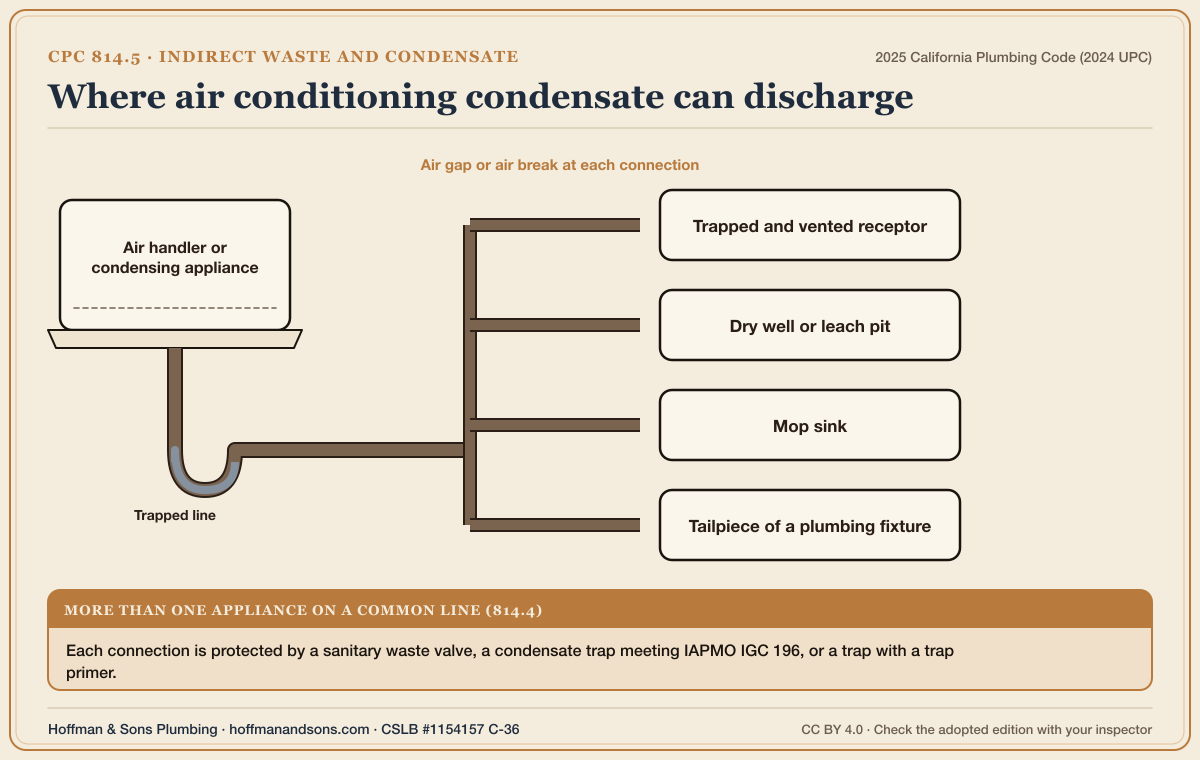
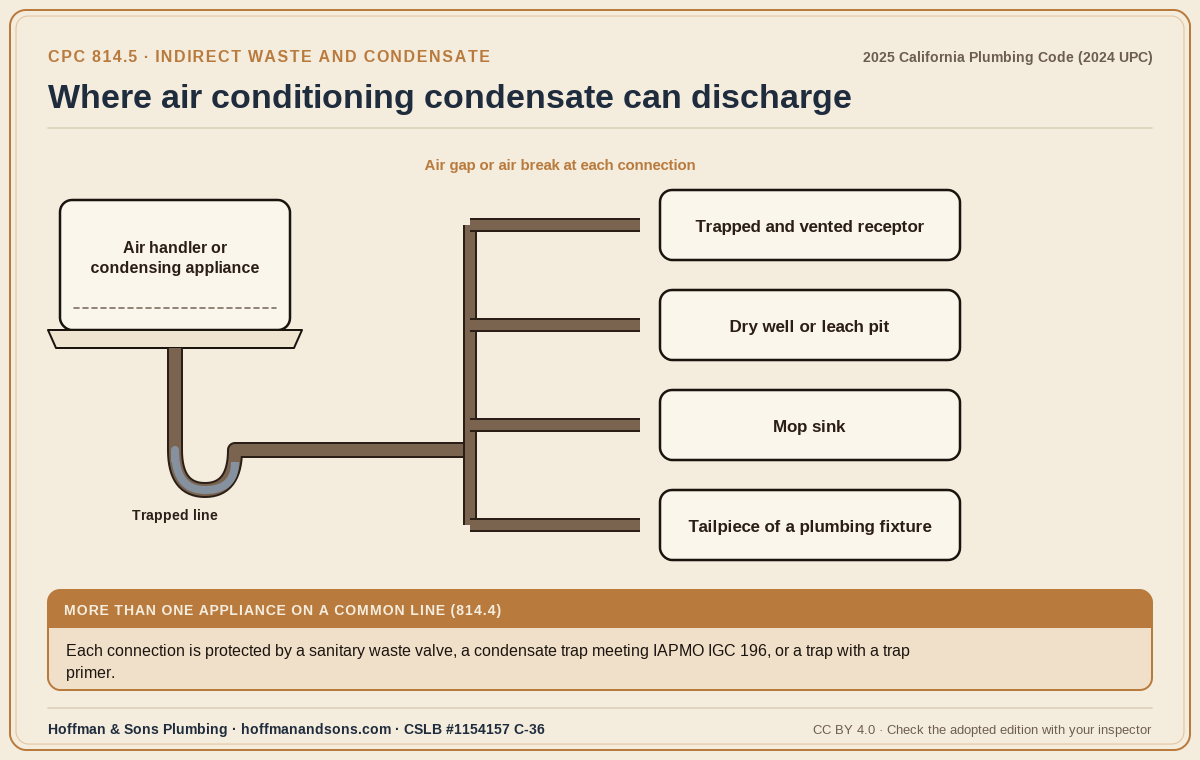
Where the condensate line ends is a short list. It connects indirectly, through an air gap or air break, to a trapped and vented receptor, a dry well, a mop sink, a leach pit, or the tailpiece of a plumbing fixture.
An individual condensate drain gets trapped in accordance with the appliance manufacturer's instructions, or in accordance with Section 814.4. Under 814.4, where more than one appliance connects to a common indirect waste pipe, each connection is protected by a sanitary waste valve, a condensate trap meeting IAPMO IGC 196, or a trap with a trap primer.
The point of all of it is keeping sewer gas and drain backup out of the equipment while still letting condensate flow away freely.
On the job
- A line that ties into a fixture tailpiece has to be made as an indirect connection, with an air gap or air break. Check with the inspector how they want it done.
- A dry well or leach pit is an option when there's no drain nearby. Check that the AHJ allows it on that site.
- Ask for the manufacturer's trap requirement before you trap the line, or use the 814.4 protection.
- With two or more units into one line, plan for the 814.4 protection (sanitary waste valve, condensate trap or trapped primer) before you tie them together.
The inspector and your city's adopted edition have the final word.