The rule
An indirect waste is a drain that doesn't connect straight to the sewer side. It empties into a fixture, floor sink, standpipe or other receptor that's itself trapped and connected to the drain. The open space in between keeps sewage and drain water from backing up into whatever the pipe came from, which matters for food equipment, ice machines, dishwashers and the like.
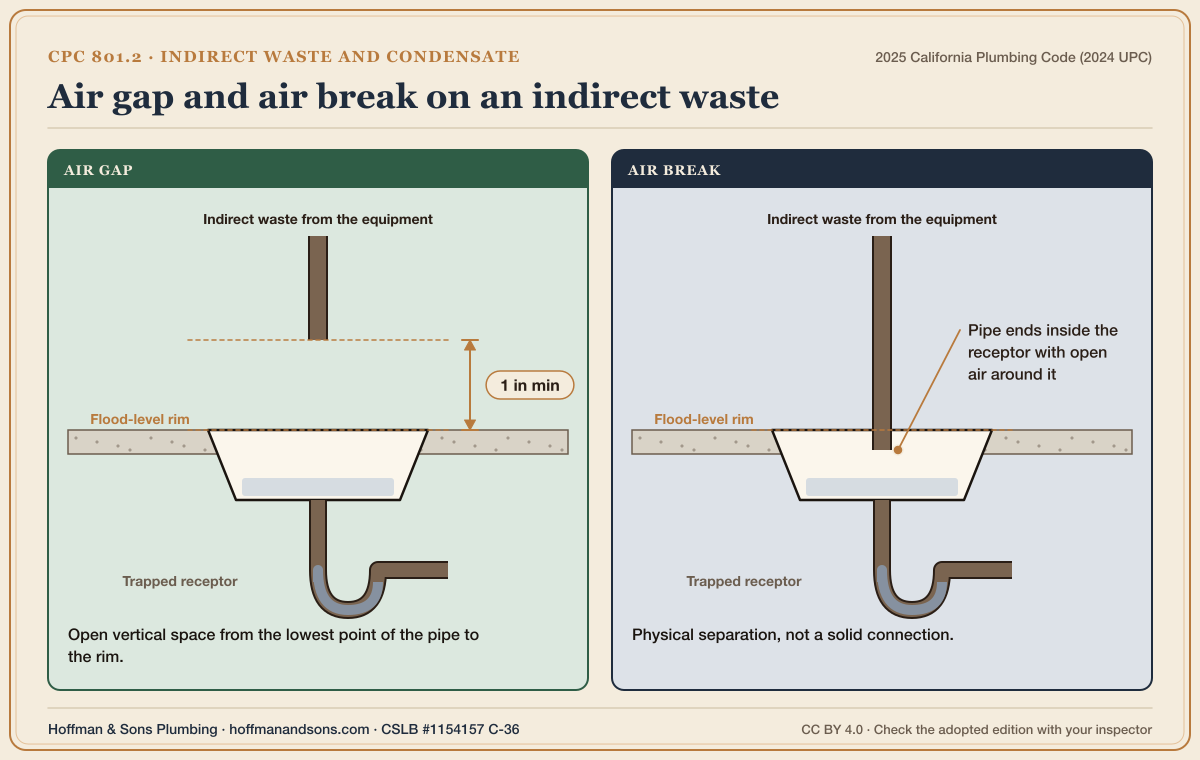
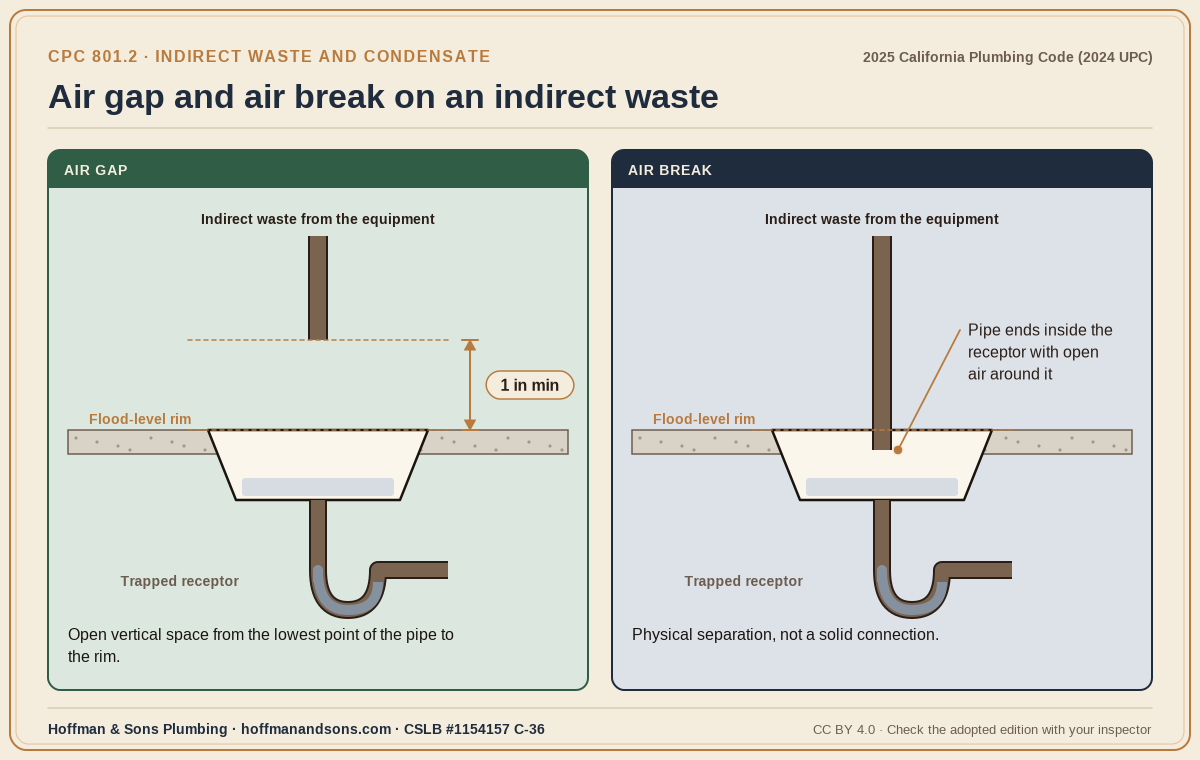
The code gives you two kinds of separation. An air gap is clear vertical space between the end of the waste pipe and the flood-level rim of the receptor. An air break is a physical separation too, such as a low inlet into the receptor, where the pipe ends inside the receptor with open air around it.
Where a drainage air gap is required, the vertical distance from the lowest point of the indirect waste pipe or fixture outlet up to the flood-level rim of the receptor can't be less than 1 inch. Measure to the rim, not to the water level in the receptor.
On the job
- Measure the gap with the receptor in place. A floor sink that gets raised a bit during finish flooring can eat your clearance.
- Cut the waste pipe end square and keep it clear of the receptor wall and any grate that could sit on it.
- If you're not sure whether the equipment needs an air gap or can take an air break, check the section for that equipment (801.3, 807.3, 814.5) and ask the inspector. Food-handling fixtures need an air gap, for example.
The inspector and your city's adopted edition have the final word.