The rule
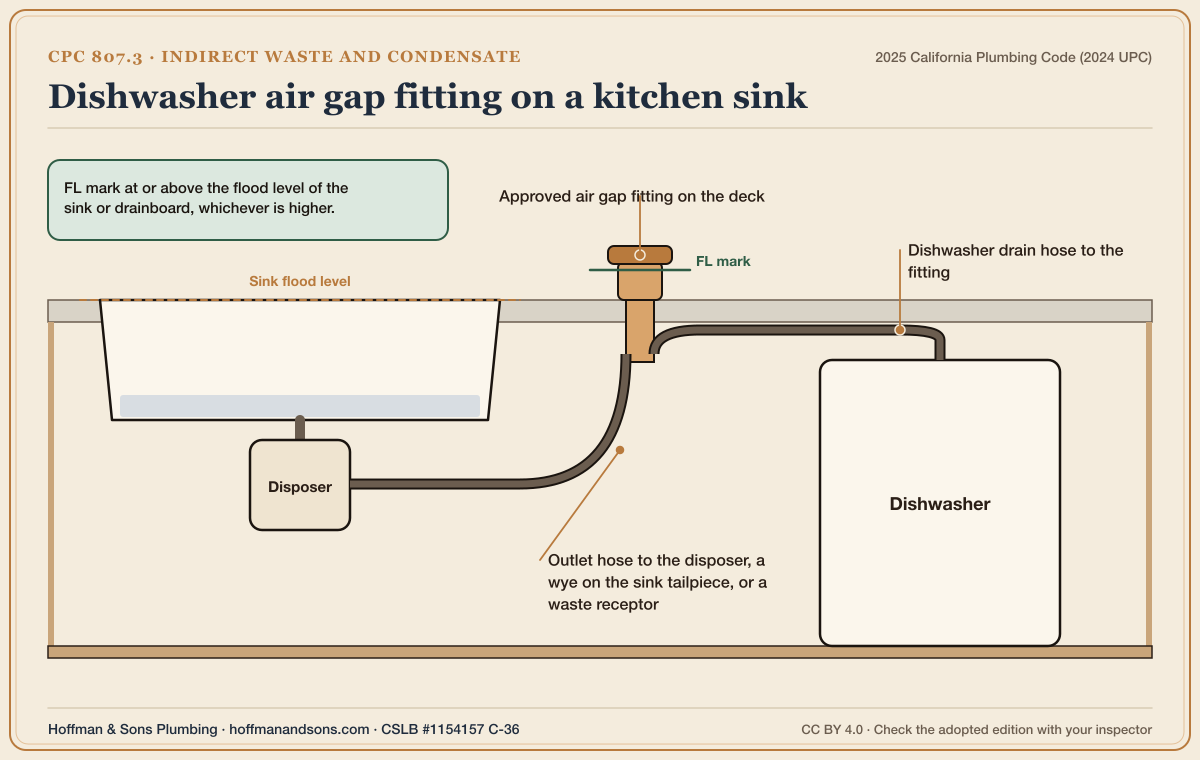
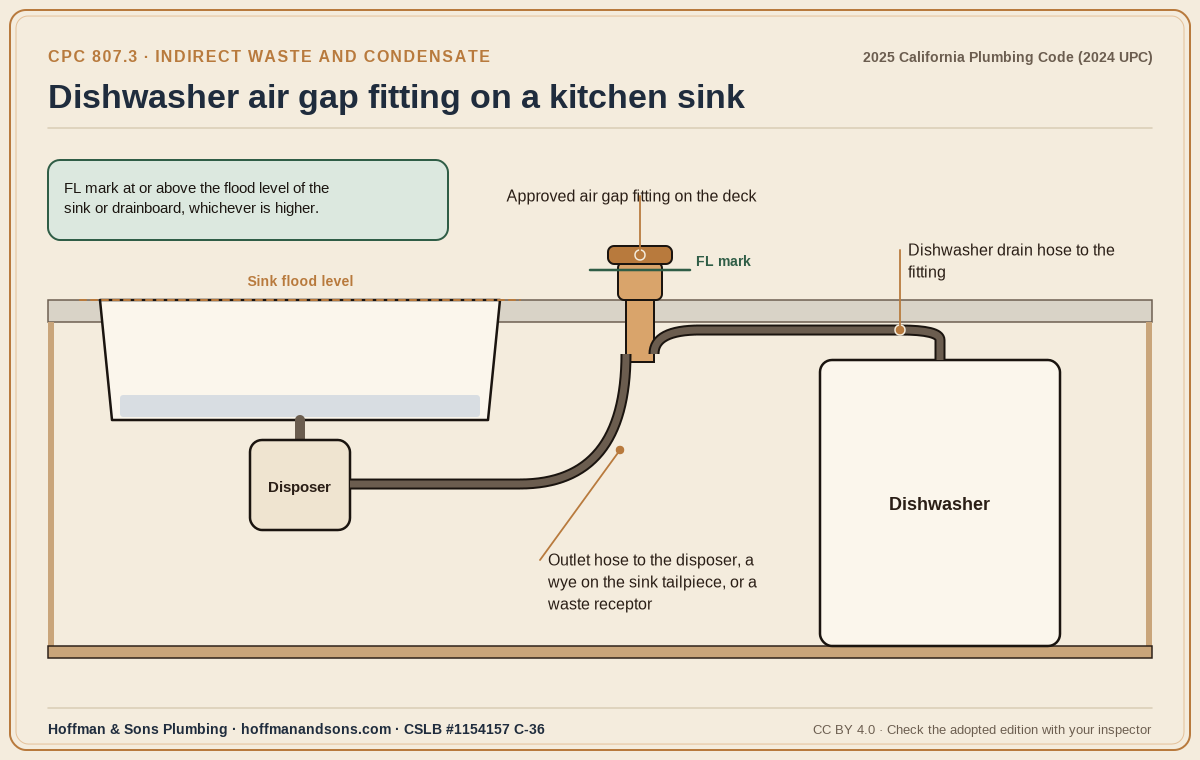
A dishwasher drain tied straight into a disposer or sink drain can pull dirty water back into the machine. The code wants an approved dishwasher air gap fitting on the discharge side of the machine, with open air between the in and out connections.
Install the listed fitting with its FL (flood level) marking at or above the flood level of the sink or drainboard, whichever is higher. That usually puts the cap on the countertop or sink deck, above the rim of the sink.
The hose from the dishwasher runs up to the fitting's inlet, and a second hose runs from the outlet to a waste receptor, a wye branch on the kitchen sink tailpiece, or the dishwasher connection of a food waste disposer. Section 414.3 lists those three.
On the job
- Take the fitting's FL mark seriously. Set it so the marking sits at or above the flood level of the sink or drainboard, whichever is higher.
- Read the dishwasher manufacturer's instructions too, and follow them along with the fitting's listing.
- Test it by running the washer through a drain cycle and checking the cap. Water spitting out of the cap means the drain downstream is blocked.
- Tell the homeowner to wipe the cap and pop it open now and then. A plugged air gap leaks across the counter.
The inspector and your city's adopted edition have the final word.