The rule
Steam and hot water under pressure don't belong in a drainage system. So no steam pipe goes directly into it, and water above 140 degrees F can't be discharged under pressure directly into it.
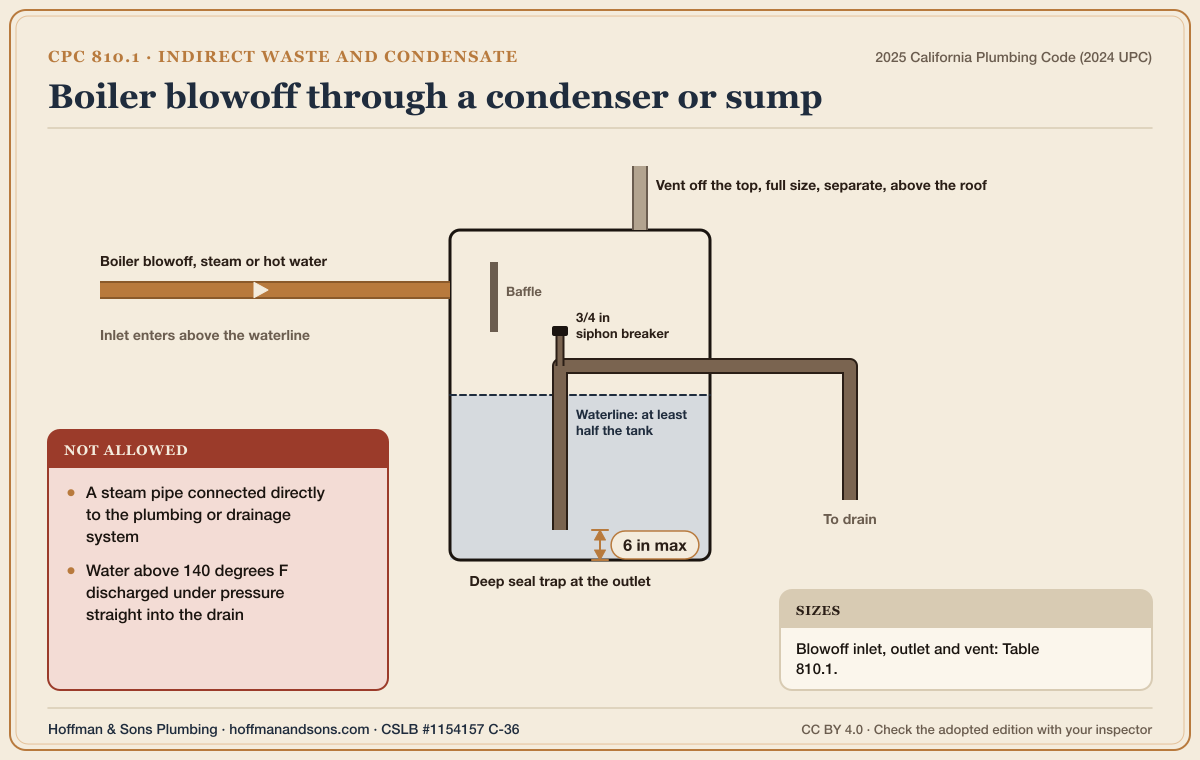
Boiler discharge pipes go through indirect waste as decided by the Authority Having Jurisdiction or the boiler manufacturer's recommendations. The allowed route is an open or closed condenser, or an approved intercepting sump, that stops steam and pressurized hot water from entering the drain.
A closed condenser or sump has a vent taken off the top and run full size, separately, above the roof. The outlet is trapped with a deep seal trap reaching within 6 inches of the tank bottom, with a 3/4 inch siphon-breaker opening at the top of the trap. Outlets come off the side so the waterline always fills at least half of the tank, and inlets enter above that waterline. Wear plates or baffles protect the shell.
Table 810.1 gives the sizes of the boiler blowoff inlet, the water outlet and the vent. Contents of condensers receiving steam or hot water under pressure pass through an open sump before they reach the drainage system.
On the job
- Get the boiler maker's blowoff requirements and the AHJ's before you rough in. This one is decided by both.
- Run the condenser vent straight and full size up through the roof. Don't tie it into any other vent.
- Check the water level setup on the sump. If the outlet's too low, the sump won't hold its half-full waterline and steam can reach the drain.
- Check the drainage pipe material with the AHJ wherever hot discharge could reach it.
The inspector and your city's adopted edition have the final word.