The rule
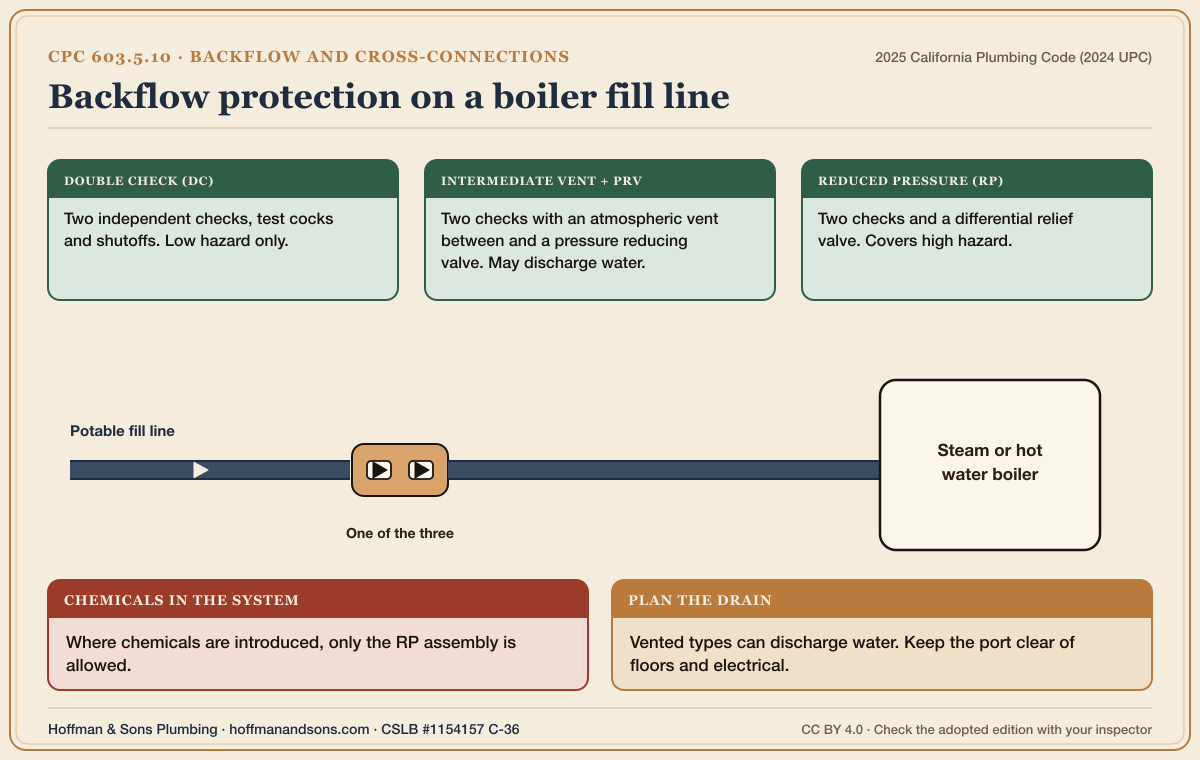
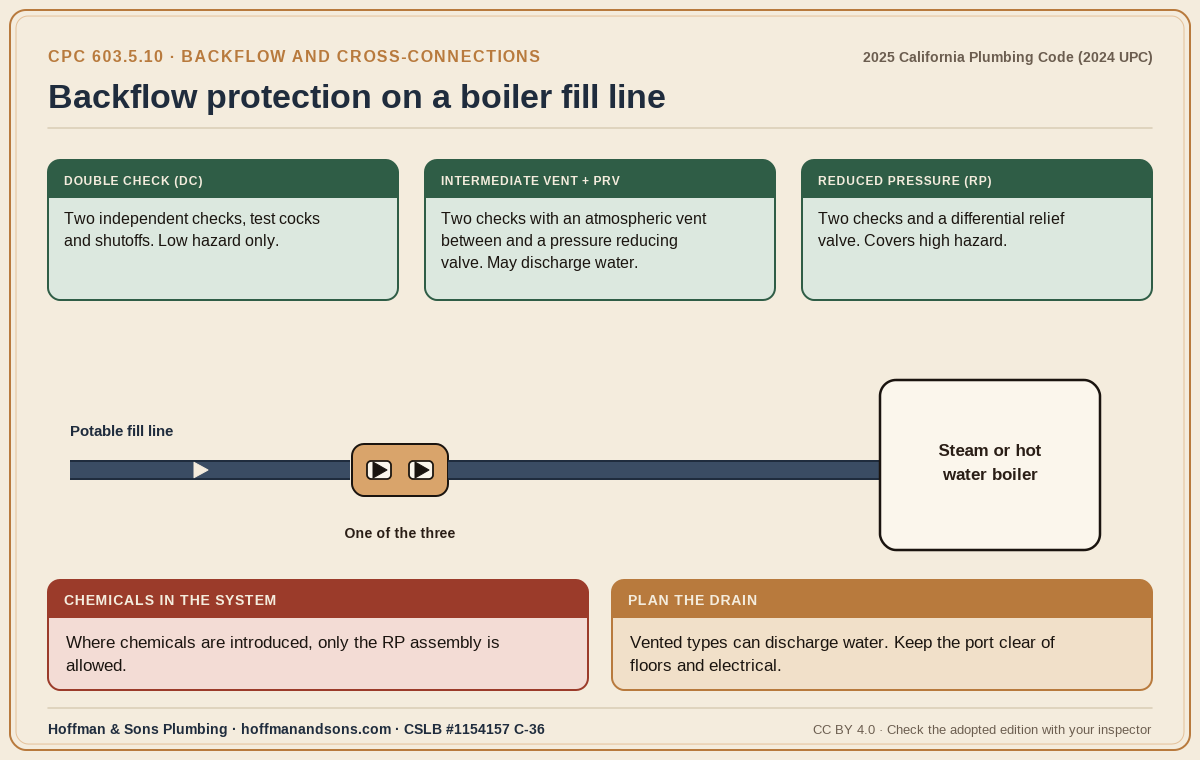
A boiler loop is a closed system with its own pressure, heat and sometimes treatment chemicals. The potable fill line is a direct link between that and the house supply, so it needs backflow protection.
The code accepts one of three: a double check valve backflow prevention assembly, a backflow preventer with an intermediate atmospheric vent and a pressure reducing valve, or a reduced-pressure principle assembly, all in accordance with Table 603.2.
If chemicals are introduced into the system (inhibitors, glycol, treatment), only the RP is allowed. Table 603.2 adds that the intermediate-vent types are for connections to water boilers where no high-hazard chemicals go in, and that they can discharge water.
On the job
- Ask whether there's glycol or any treatment in the loop. That decides between the three assemblies and an RP.
- The combination fill valve with a built-in backflow preventer on many residential hydronic boilers is the usual solution. Install it per its listing and check it isn't bypassed.
- Plan a discharge route for the vented types. They can dump water, so keep the relief port from spilling onto electrical or flooring, and pipe it through an air gap to a drain where the manufacturer requires.
- Test and tag the assembly. The annual test in 603.2 still applies.
The inspector and your city's adopted edition have the final word.