The rule
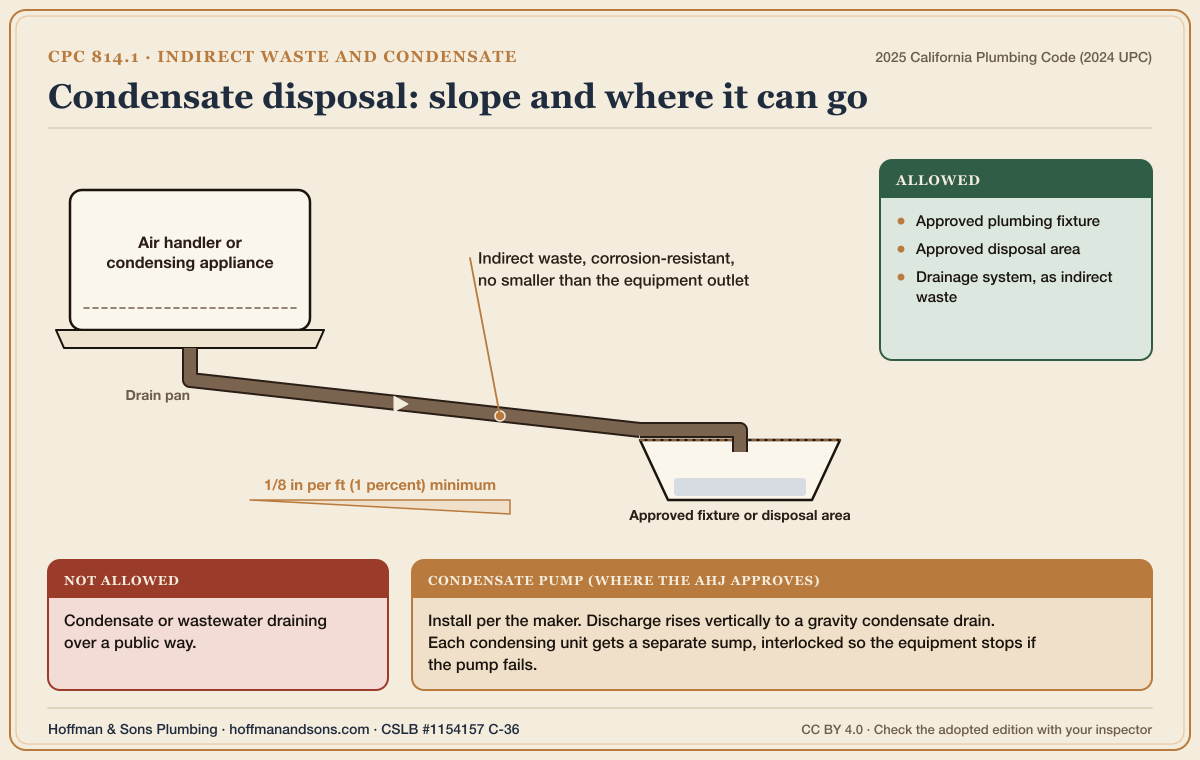
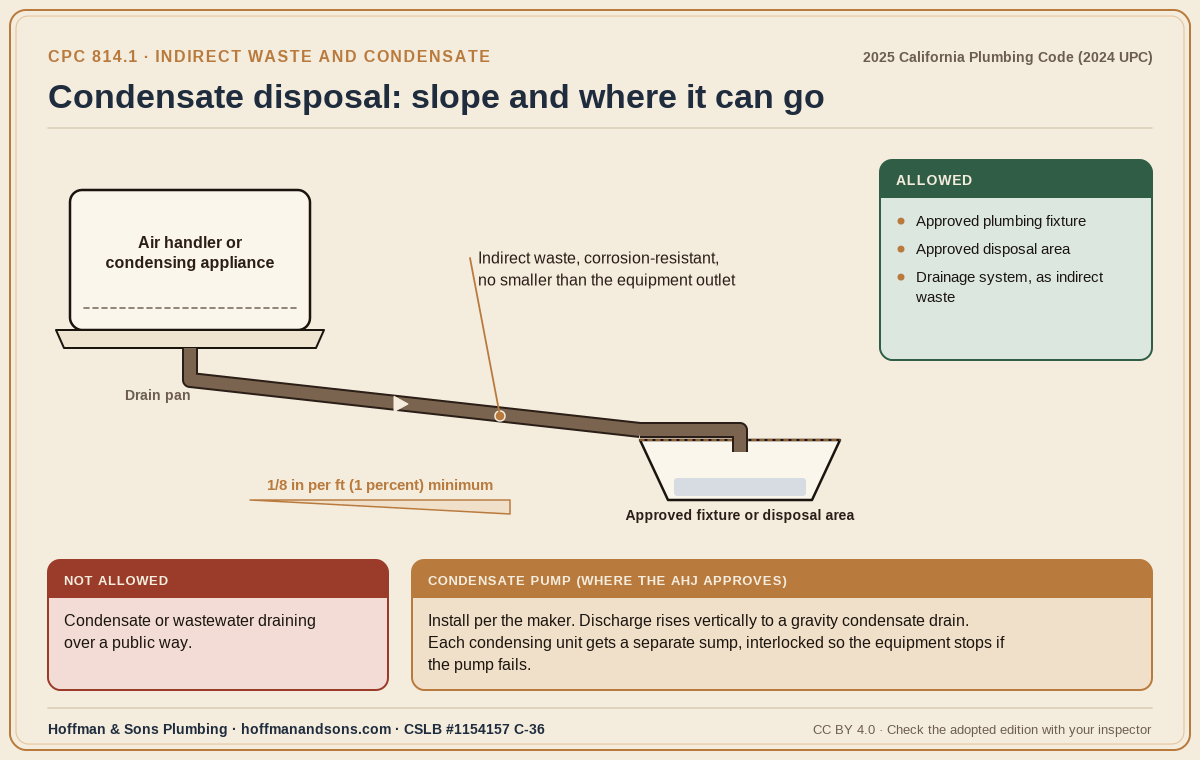
Cooling coils, air washers, condensing appliances and evaporative coolers all make condensate or wastewater. It has to be collected and sent to an approved plumbing fixture or disposal area.
If it goes into the drainage system, it's an indirect waste: it can't be connected solidly. The waste pipe slopes at least 1/8 inch per foot (a 1 percent slope), uses an approved corrosion-resistant material, and is sized no smaller than the equipment's outlet, following 814.3 for cooling coils or 814.4 for condensing appliances.
Condensate or wastewater can't drain across a public way.
Where the AHJ approves condensate pumps, install them per the manufacturer's instructions. The pump discharge rises vertically to a point where it can connect to a gravity condensate drain. Each condensing unit has its own sump, interlocked with the equipment so the equipment shuts off if the pump fails.
On the job
- Slope is the repeat correction on condensate lines. Run at least 1/8 inch per foot from the unit to the point of disposal, and don't let it dip.
- Look at the discharge point before you stub the line. Dumping on a sidewalk or driveway that drains to the street is the 'public way' problem.
- When a pump is needed, the interlock is part of the job. Confirm it shuts the equipment off before the sump overflows.
- Size the line from the equipment outlet and the tables: 814.3 for cooling coils, 814.4 for condensing appliances. Never go smaller than the outlet.
The inspector and your city's adopted edition have the final word.