The rule
An air handler in an attic or over a finished ceiling can ruin a lot of drywall if the primary drain clogs. So when equipment sits where condensate overflow could cause damage, it needs a primary drain that follows 814.1, plus a second layer of protection.
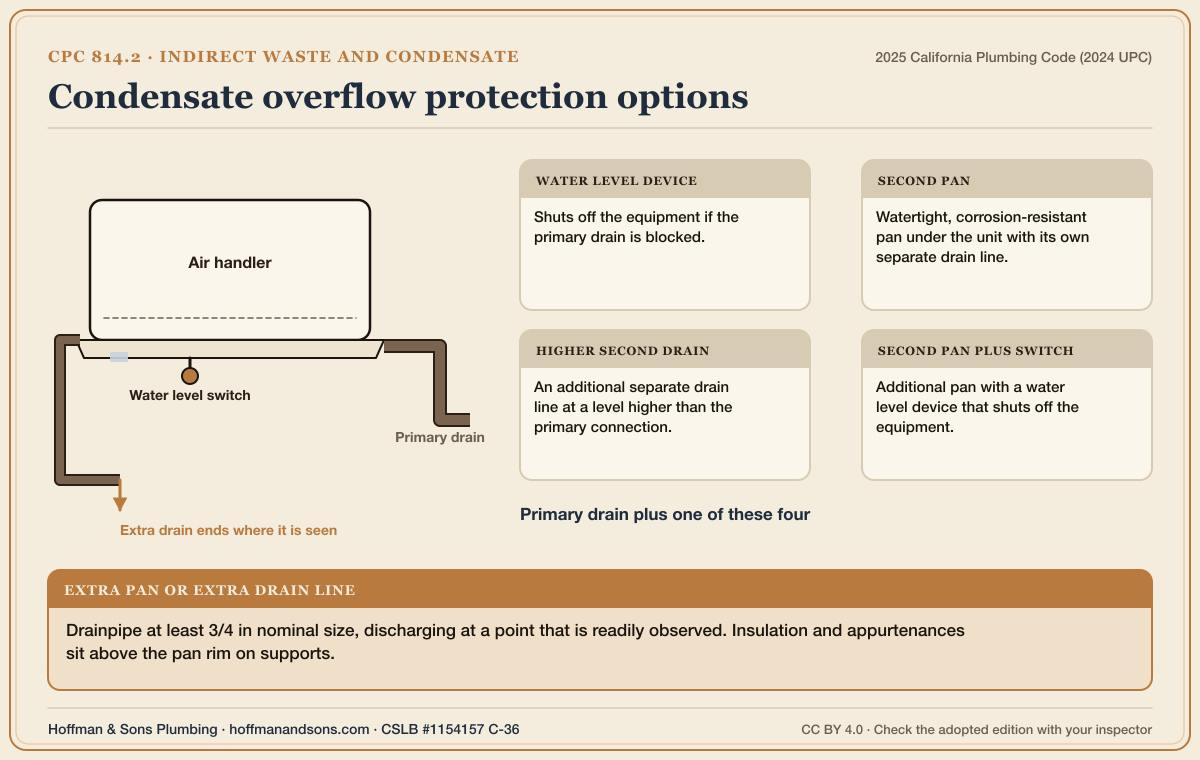
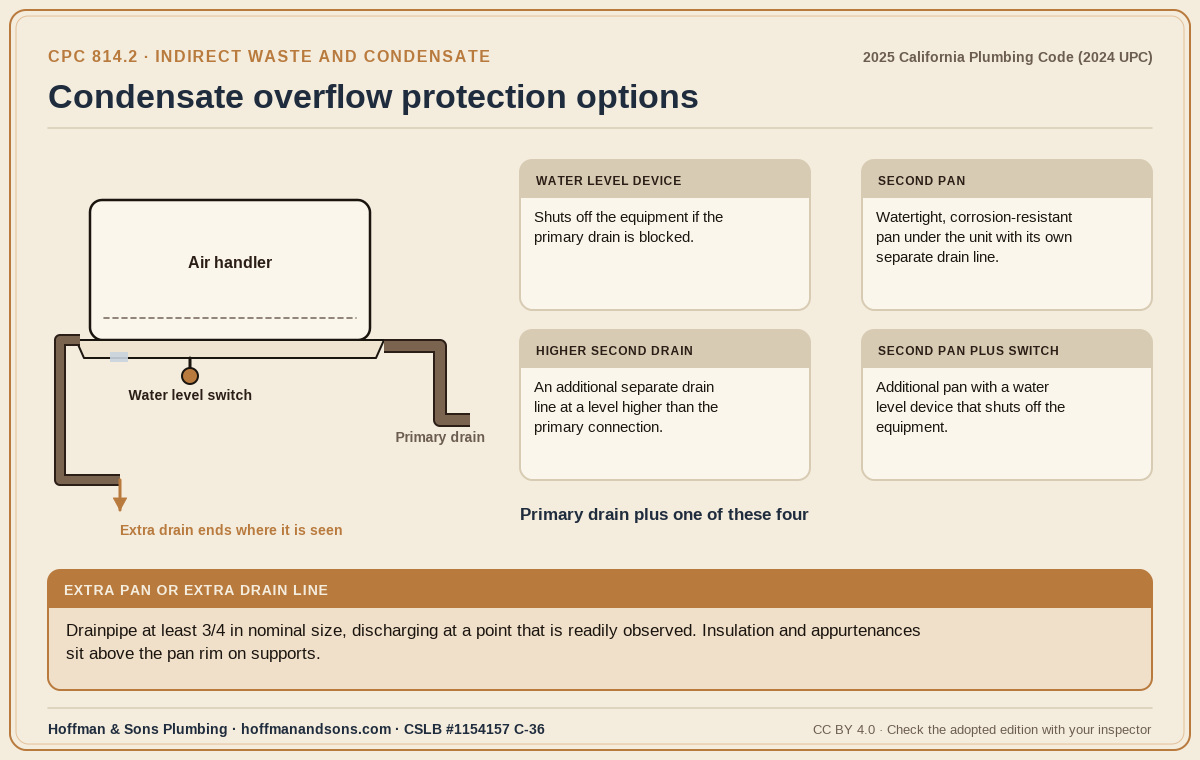
You can pick one of four. A water level detecting device that shuts off the equipment if the primary drain blocks. An additional watertight, corrosion-resistant pan with its own separate drain line under the coil or unit. An extra separate drain line connected at a level higher than the primary drain connection on the pan. Or an additional pan with a water level detecting device that also shuts off the equipment.
The additional pan or extra drain line gets a drainpipe at least 3/4 inch nominal size, discharging at a point where it can be readily observed.
If insulation or other items are installed where a pan overfill could damage them, they sit above the pan rim on supports. Supports that touch the condensate have to be corrosion resistant.
On the job
- Ask what's below the unit. Finished ceiling, living space or an attic over a bedroom all trigger the extra protection.
- Pick the secondary protection that fits the install. A float switch on the primary pan is cheap. A secondary pan with its own drain needs room.
- Run the secondary drain to where somebody will see it dripping, like over a window or an exterior wall. That's the point of the 'readily observed' wording.
- Test the float switch before you leave. Lift it and make sure the equipment shuts off.
The inspector and your city's adopted edition have the final word.