The rule
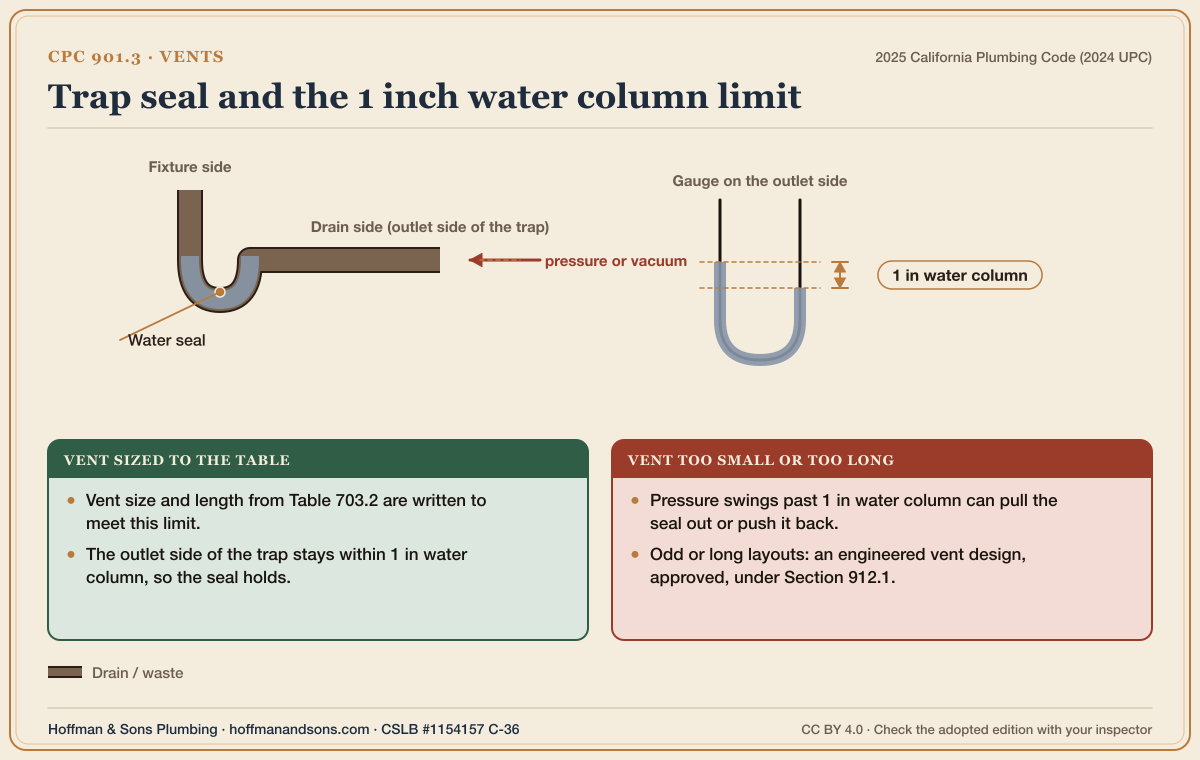
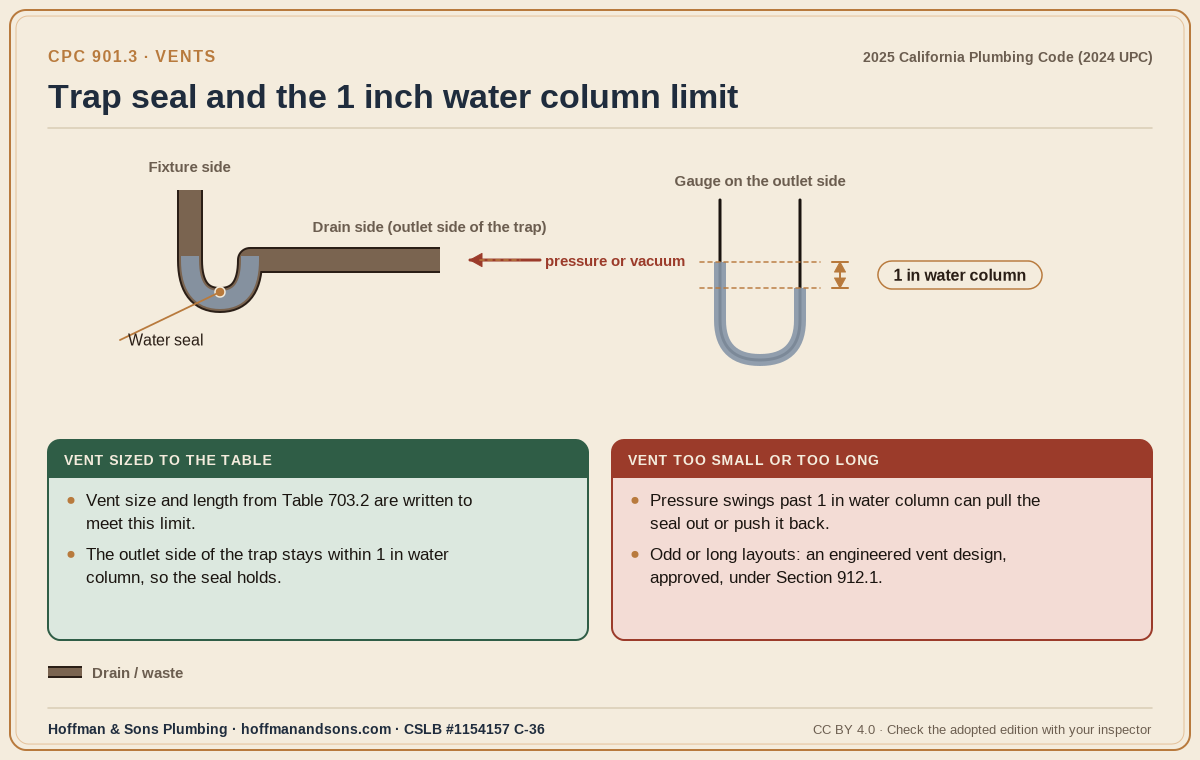
One inch of water column is a tiny pressure. It's the design target for the whole vent system: past that, a trap seal can be pulled out or pushed back.
You won't measure it on a job. It's the reason behind the vent sizes and lengths in Table 703.2, which the table itself says is written to agree with this requirement. Follow the table and you've met the target.
Where a design doesn't fit the table, such as a long or unusual vent layout, the code lets a registered design professional design the vent system by accepted engineering practice, subject to approval under Section 301.5.
On the job
- When a vent run is longer than the table allows, upsize it rather than guess. A vent that's too small or too long is how a seal gets pulled.
- Seal loss shows up as sewer smell from a fixture that's used rarely or a trap that's dry on a fixture that's used every day. Check the vent before blaming the trap.
- Engineered vent designs have to be approved before they go in. Don't install one on a guess.
The inspector and your city's adopted edition have the final word.