The rule
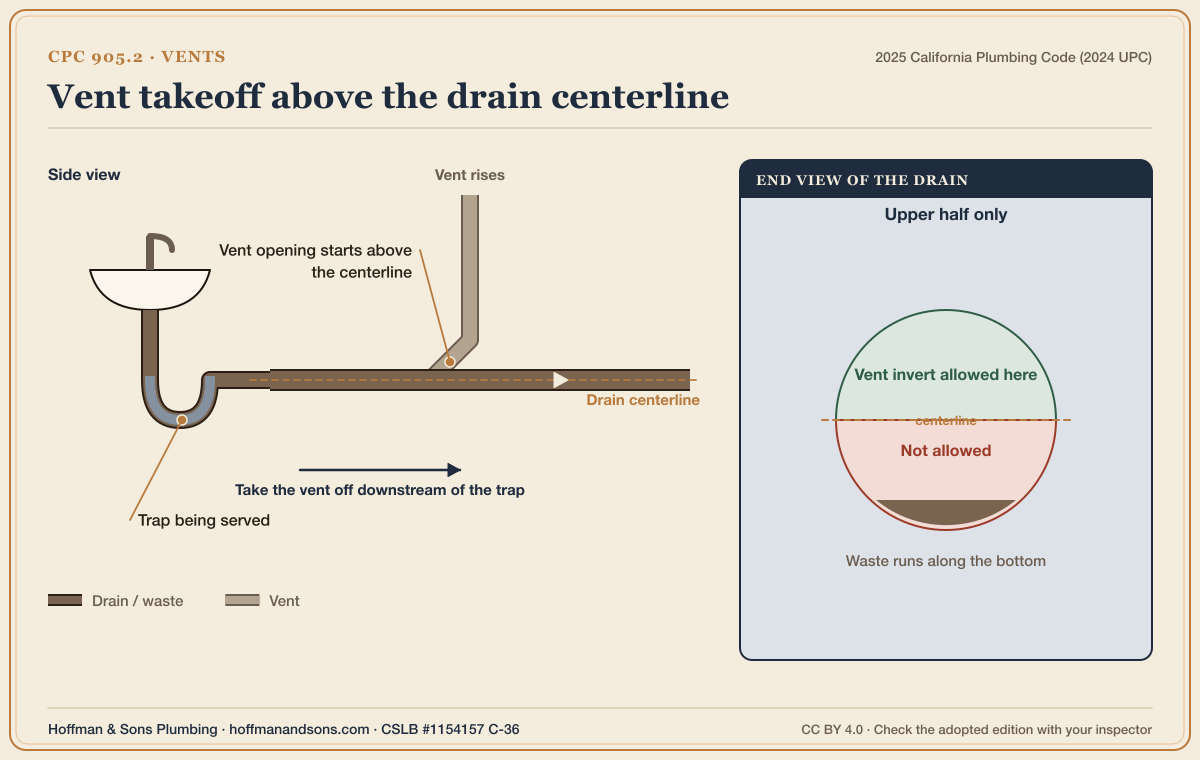
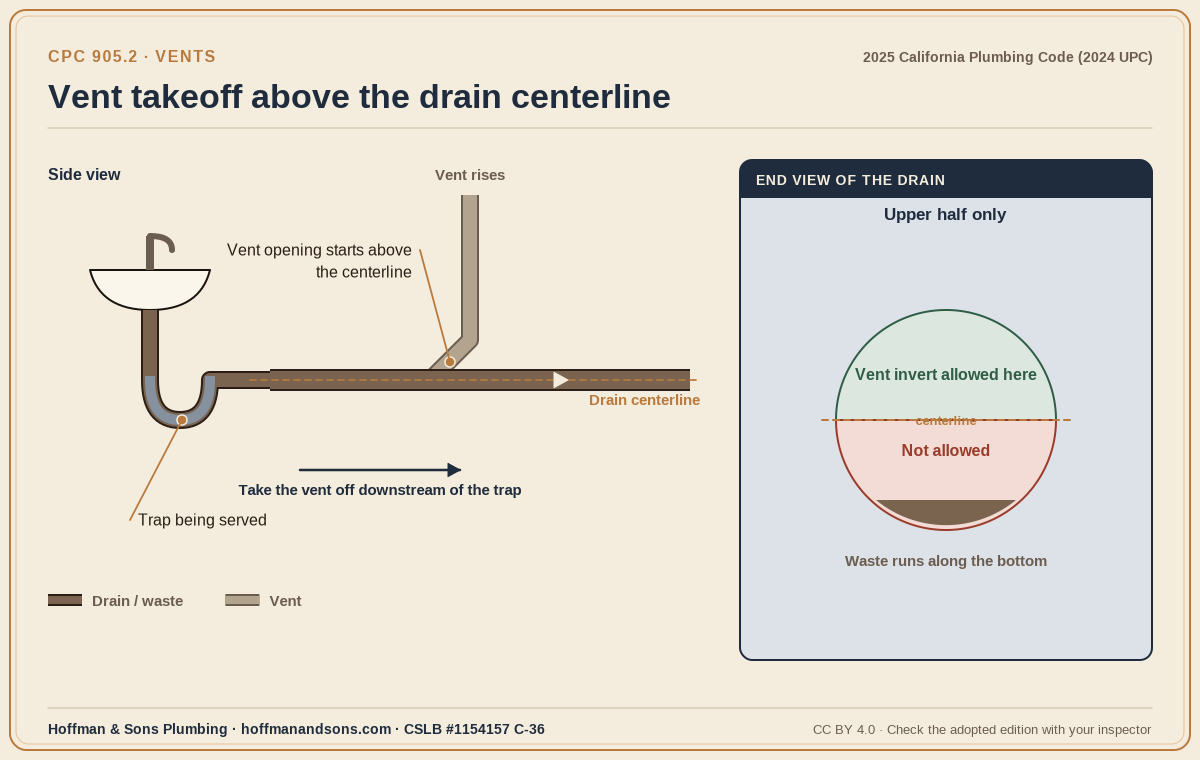
On a horizontal drain, waste runs along the bottom of the pipe. A vent connected low on the side would fill with waste. So the vent's invert, the lowest point of its opening, has to be above the centerline of the drain.
In practice that usually means the vent comes off the top half of the drain, with the fitting's branch aimed up, and then rises toward the roof.
The takeoff also has to be downstream of the trap it serves, meaning further along the direction of flow than the trap arm.
On the job
- On a horizontal drain, aim the vent branch of the fitting up. A vent that comes off the side of a wye rolled sideways is a quick correction.
- A common slip: connecting the vent upstream of the trap. The vent has to pick up the line after the trap, downstream.
- Once the vent starts up, don't let it drop back below the centerline on its way to the roof.
The inspector and your city's adopted edition have the final word.