The rule
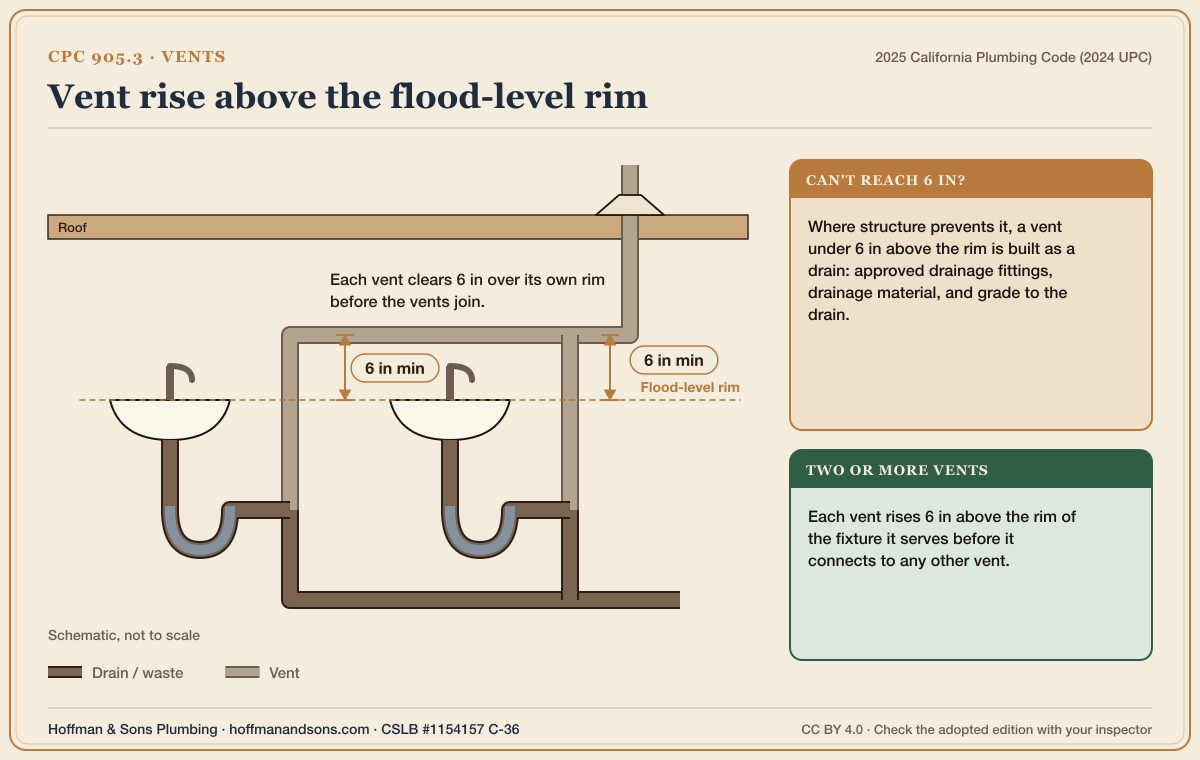
The flood-level rim is the top edge of the fixture where water would spill over. A vent that turns horizontal below that point can fill with waste if the drain backs up and the fixture floods, so the vent has to rise at least 6 inches above the rim before going sideways.
When two or more vents come together, each one has to reach 6 inches above the rim of its own fixture before it connects to any other vent.
If the structure won't let a vent get to 6 inches above the rim, it's treated as a drain: use approved drainage fittings, drainage material, and grade it to the drain.
On the job
- Measure from the rim, not from the countertop or the floor. A tub's rim and a lav's rim are at different heights.
- Vent tie-ins in a wall are often done in a single wall cavity. Leave room for the 6 inch rise before you plan the offset.
- If a joist or beam forces a low offset, change to drainage fittings and slope it back to the drain.
The inspector and your city's adopted edition have the final word.