The rule
New building storm drainage systems, and parts of existing systems that were altered, extended, or repaired, have to be tested to show there are no leaks. The test is done on the rough piping, before it's covered.
Outside leaders and perforated or open-jointed drain tile aren't tested. Everything else is tested by water or air. Plastic pipe can't be tested with air.
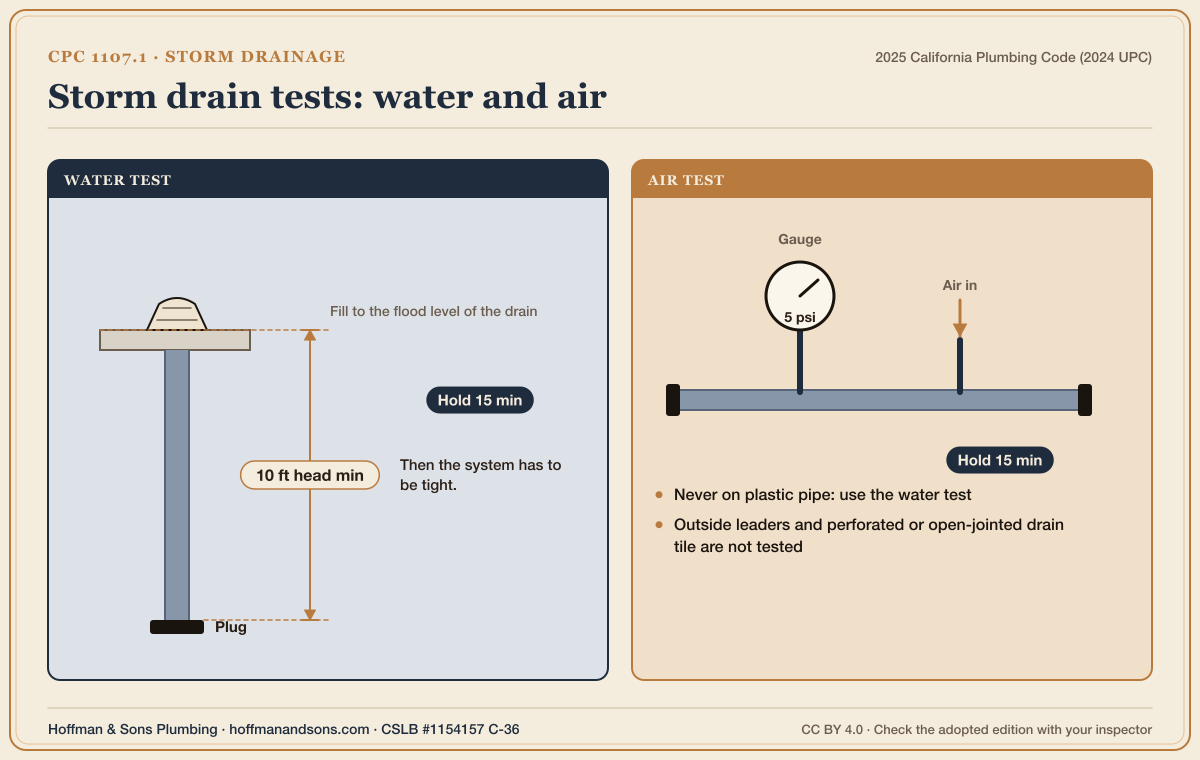
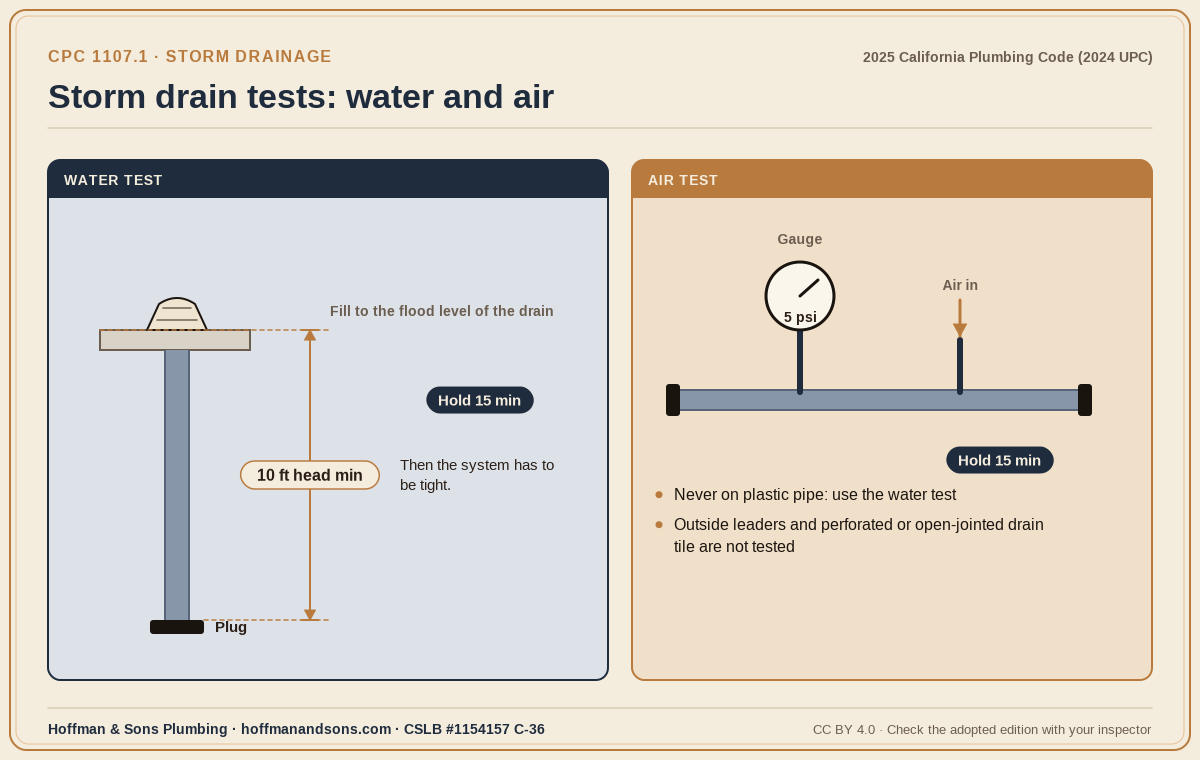
For the water test, plug all openings except the highest one and fill to the point of overflow, or test in sections with no section under a 10 foot head. The upper 10 feet of the next lower section gets retested so no joint sees less than 10 feet of head, and the top 10 feet of a roof drainage system fills to the flood level of the highest roof drain. Water stays in for at least 15 minutes before inspection starts, and then the system has to be tight.
For the air test, close the other inlets and outlets, bring the system to a uniform gauge pressure of 5 psi (or enough to balance a column of mercury 10 inches high), and hold it for at least 15 minutes without adding air. The authority can ask for cleanout plugs to be pulled to see whether pressure reached every part. If neither test is practical, Section 105.3 applies.
On the job
- Plastic storm piping like PVC or ABS gets the water test. Air isn't allowed on plastic.
- Fill a roof drain leader to the flood level of the drain to see every joint under the head. Use test plugs rated for the head.
- Schedule the inspection before you close up walls or backfill.
The inspector and your city's adopted edition have the final word.