The rule
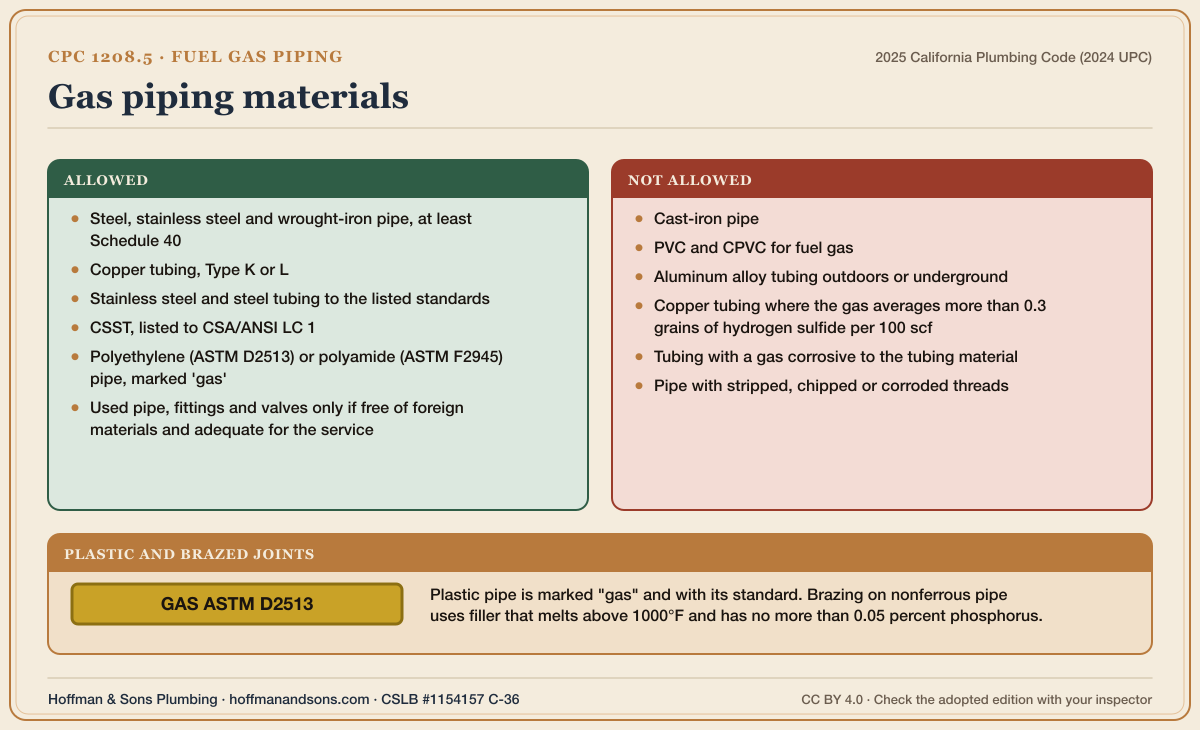
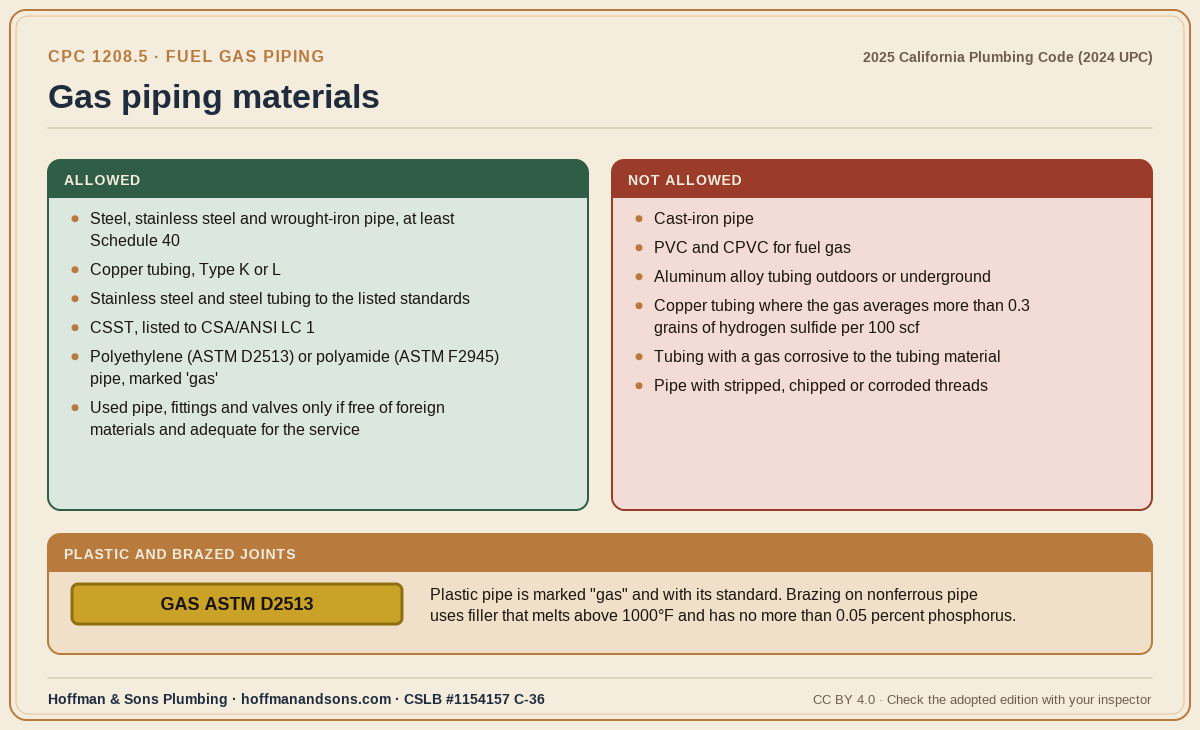
For metallic pipe, cast iron is out. Steel, stainless steel and wrought-iron pipe has to be at least Schedule 40 and meet the standards the code lists. Used pipe, fittings and valves can only go back in if they're clean of foreign material and have been checked as adequate for the service.
Metallic tubing has its own limits. Copper tubing has to be Type K or Type L and can't be used where the gas has more than an average of 0.3 grains of hydrogen sulfide per 100 scf. Aluminum alloy tubing can't go outdoors or underground, and it needs a coating where it touches masonry, plaster or insulation. Corrugated stainless steel tubing has to be listed to CSA/ANSI LC 1/CSA 6.26.
Plastic is limited to polyethylene (ASTM D2513) and polyamide (ASTM F2945) pipe, tubing and fittings, marked 'gas' and with the standard. PVC and CPVC can't be used to supply fuel gas. Where plastic is used, Section 1210.1.7 keeps it outdoors and underground.
Joints depend on the material. Schedule 40 and heavier pipe joints are threaded, flanged, brazed, welded or press-connect. Where nonferrous pipe is brazed, the brazing material has to melt above 1000°F and the alloy can't have more than 0.05 percent phosphorus.
On the job
- Read the printing on plastic gas pipe. It should say 'gas' and the ASTM number. Pipe without the marking is a correction.
- Don't reuse old fittings without checking them. If you can't tell what they've been through, they don't go back in.
- Check the gas before you run copper. The hydrogen sulfide limit depends on the gas being delivered, so ask the gas supplier if you're not sure.
- Steel pipe in the ground needs more than the right material. See Section 1210.1 for the corrosion protection rules.
The inspector and your city's adopted edition have the final word.