The rule
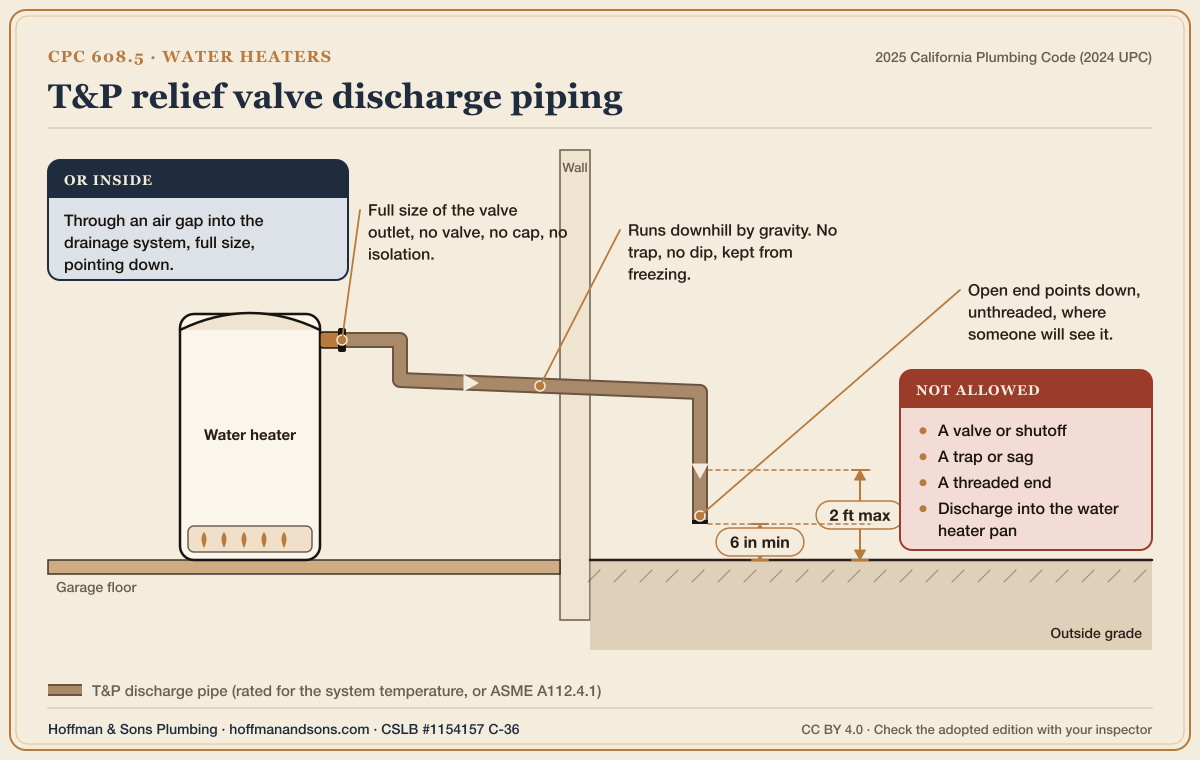
The pipe from a temperature relief, pressure relief, or combination T&P valve can't have a valve, an obstruction, or any way to shut it off. It has to be at least the size of the valve outlet and run full size to where it ends.
The material has to be rated for the system's operating temperature and approved for the use, or meet ASME A112.4.1.
It drains on its own by gravity. It can end through an air gap into the drainage system, or outside the building with the open end no more than 2 feet and no less than 6 inches above the ground, pointing down.
No part of it can be trapped or exposed to freezing. The end can't be threaded, so nobody can cap it. It can't dump into the water heater's drain pan, and the end has to be readily observable, so somebody notices when the valve opens.
On the job
- Run it downhill the whole way. A dip that holds water is a trap, and inspectors look for it.
- Cut the end square and leave it unthreaded. A threaded end or an adapter on the tail is an easy correction notice.
- In a garage, end it where someone will see the water. Inside a wall cavity or under a slab defeats the readily observable rule.
The inspector and your city's adopted edition have the final word.