The rule
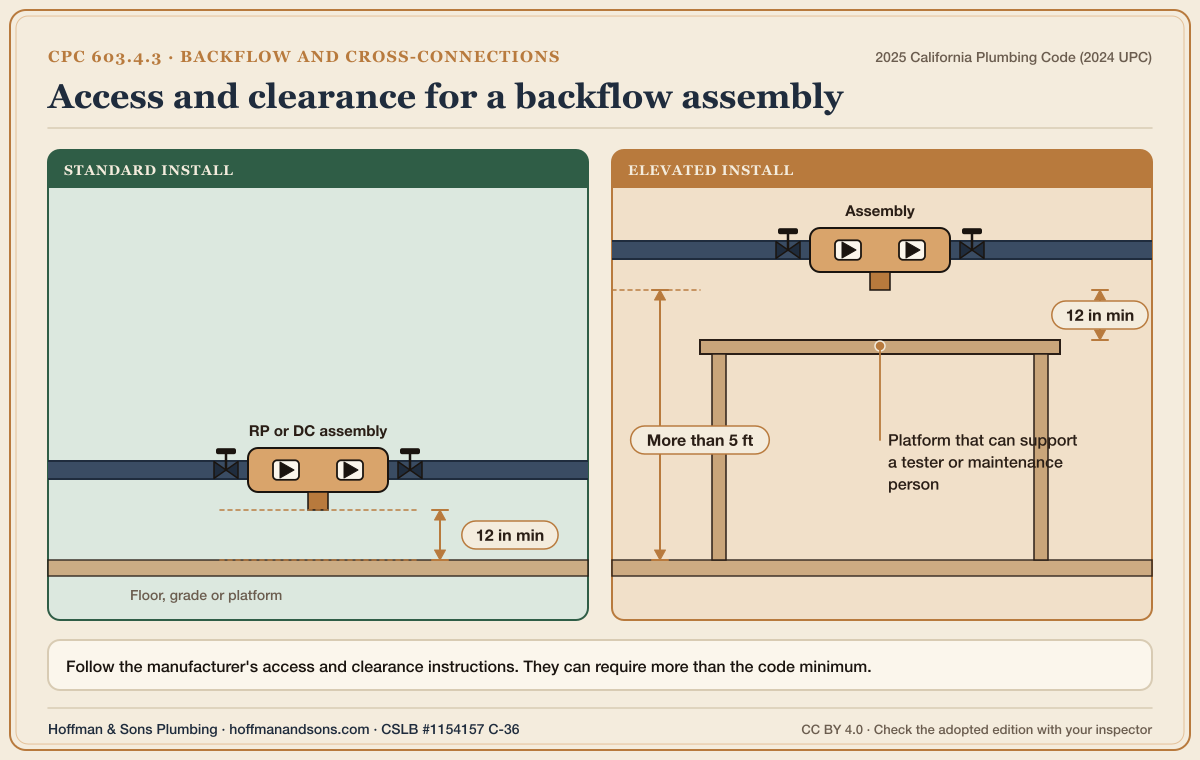
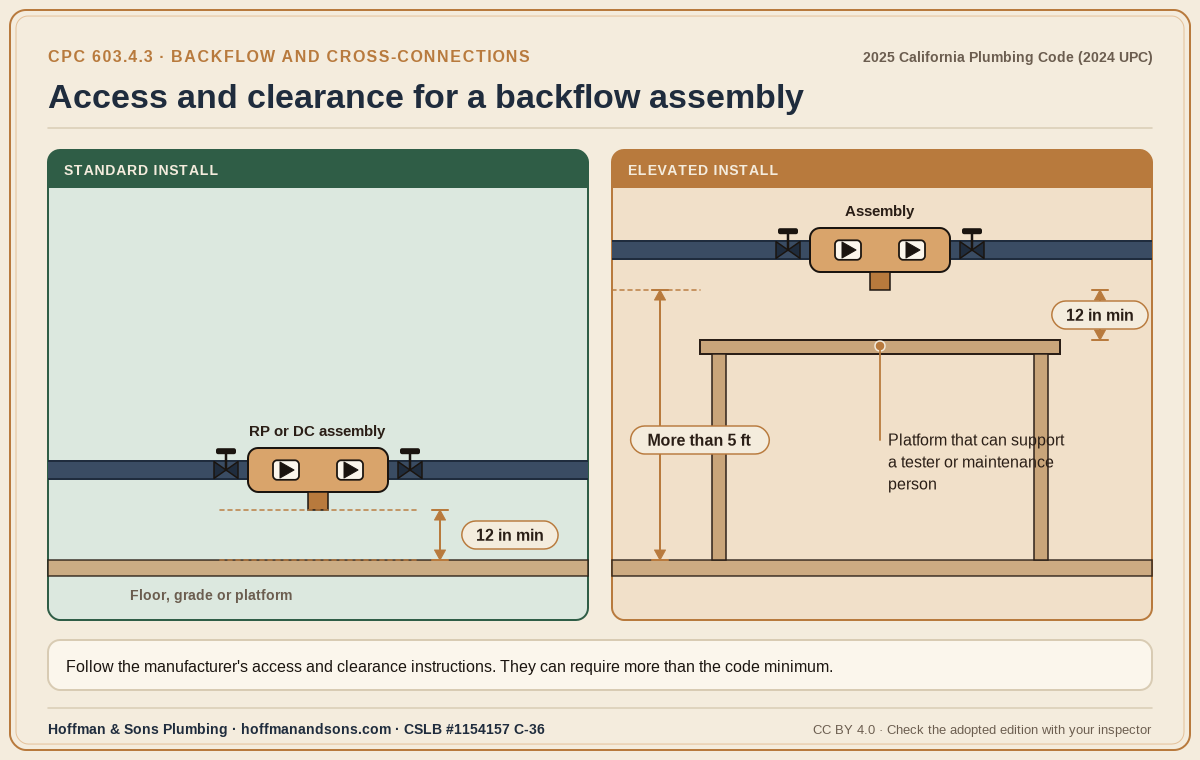
The tester has to be able to reach the test cocks and valves, and has to be able to work on the assembly. The code sets the minimum: access and clearance per the manufacturer's instructions, and not less than 12 inches between the lowest portion of the assembly and the grade, floor or platform below it.
When the assembly is elevated so that it's more than 5 feet above the floor or grade, it needs a platform that can support a person doing the testing or maintenance. A step stool or a ladder leaned on a wall doesn't meet that.
The rules in Table 603.2 for DC, RP and detector assemblies line up with this: horizontal unless listed otherwise, access per the manufacturer's instructions, 12 inches at the bottom for maintenance, and a platform or ladder where needed.
On the job
- Set the bottom of the assembly with the 12 inch clearance in mind from the start. Install it too low and a tester has to lie on the ground or the whole thing gets raised later.
- Mount in a spot where a person can stand in front of the test cocks, not behind a shrub, in a tight closet, or tucked against a wall.
- In a mechanical room or on a roof, a high assembly needs a real platform that can hold a person. Plan it with the framing and the structural contractor.
- Check the manufacturer's sheet. It can require more than the code minimum.
The inspector and your city's adopted edition have the final word.