The rule
A sprinkler system is a cross-connection by nature: the pipes sit in the ground with fertilizer, pesticides and standing water around the heads. The code lists what protects the potable supply, and the choice depends on what the system includes.
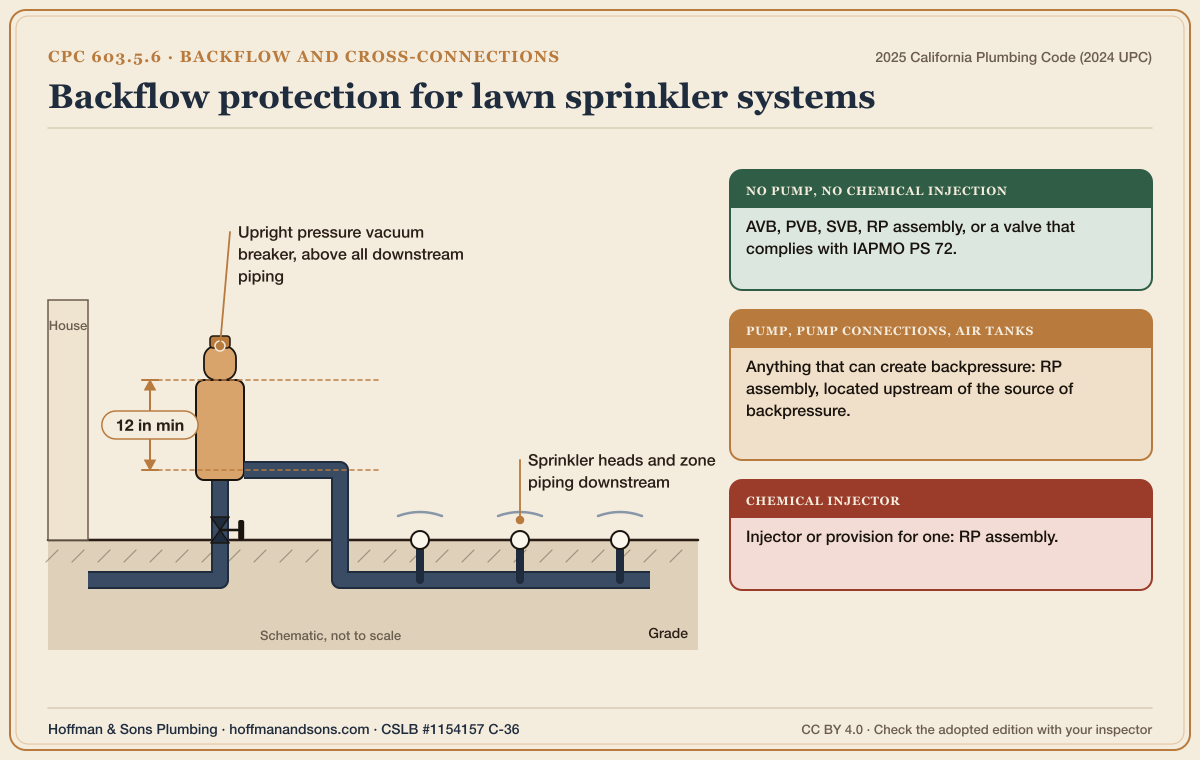
No pump, no connections for pumping equipment and no chemical injection: choose from an atmospheric vacuum breaker, a pressure vacuum breaker, a spill-resistant pressure vacuum breaker, an RP assembly, or a valve that complies with IAPMO PS 72.
If the system has pumps, connections for pumping equipment, auxiliary air tanks, or is otherwise capable of creating backpressure, protect it with an RP located upstream of the source of backpressure. If a backflow device is installed downstream of a potable supply pump, it's an AVB, PVB, SVB or RP.
Where the system has a chemical injector or provisions for one, the supply is protected by an RP.
On the job
- Ask early whether there's a pump, a booster, a rainwater tie-in or a fertilizer injector. That one answer decides the device.
- A PVB goes upright, at least 12 inches above all downstream piping, which usually means above the highest head or valve. An AVB is 6 inches. Mounting it low is the most common correction.
- Plan where the PVB or RP can spit water when it relieves, and keep it out of a planter you'd rather not flood.
- The device is a testable assembly. Tag it and tell the owner about the annual test in 603.2.
The inspector and your city's adopted edition have the final word.