The rule
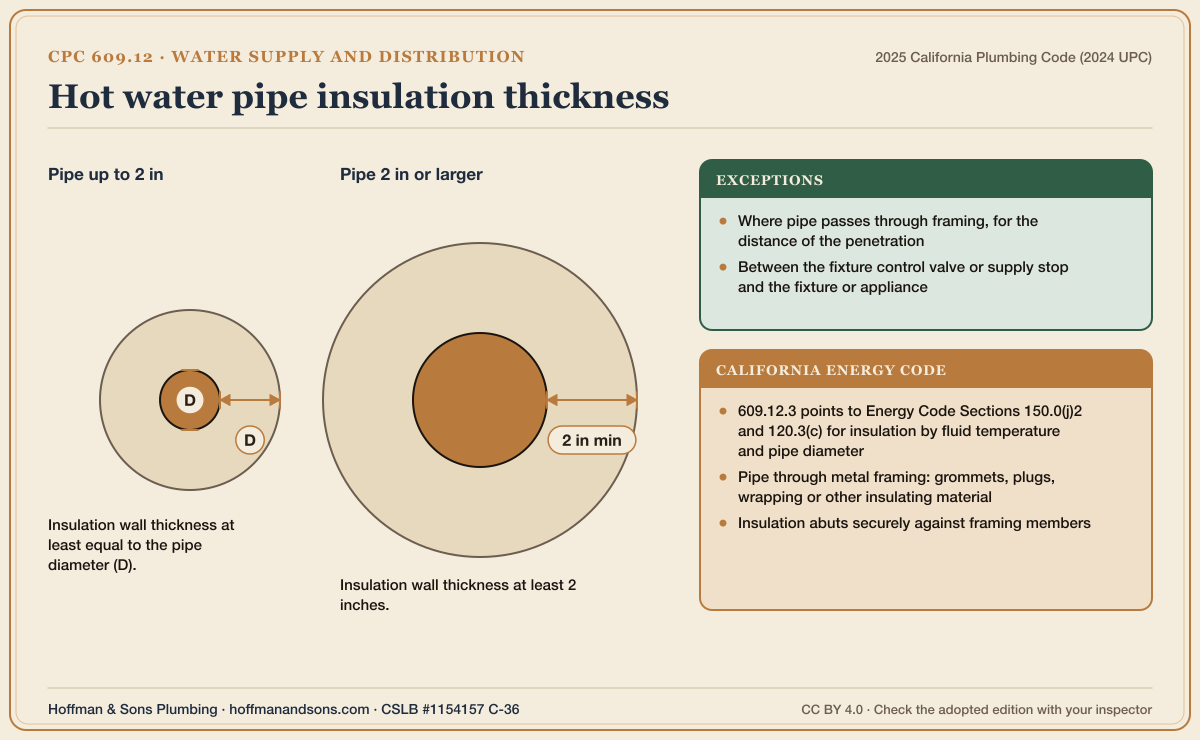
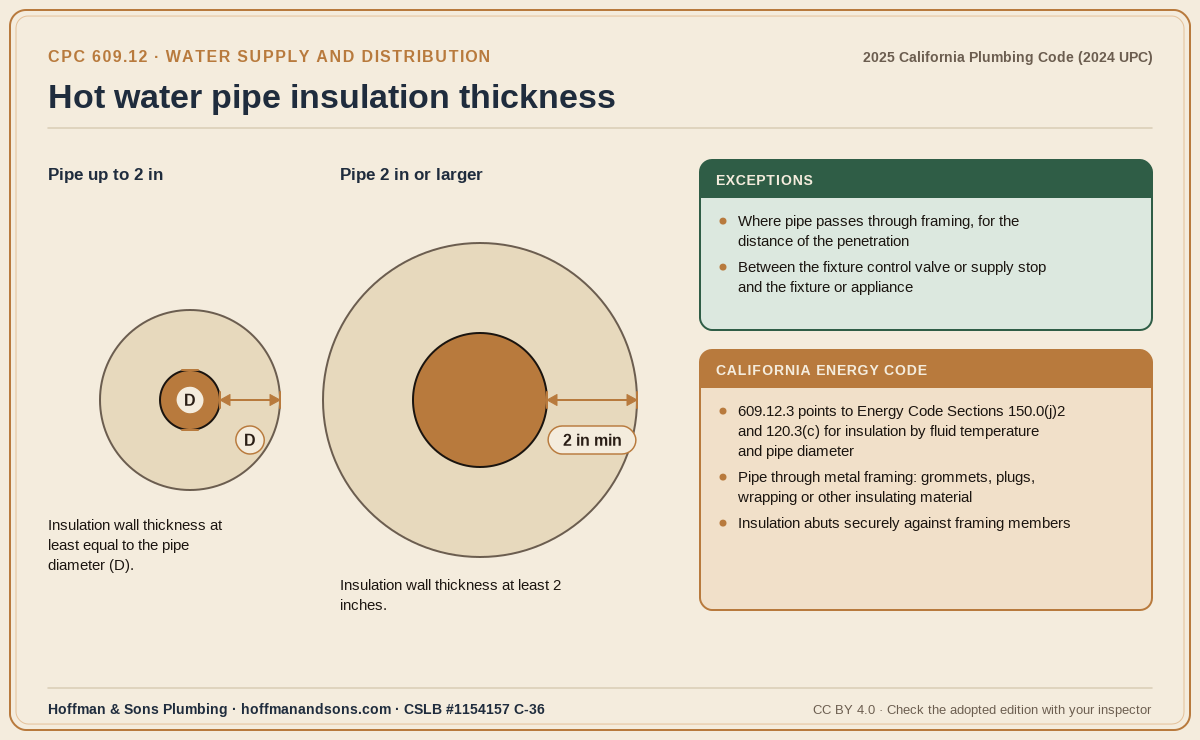
Domestic hot water piping has to be insulated. The plumbing code's minimum wall thickness is the diameter of the pipe for pipe up to 2 inches in diameter, and at least 2 inches for pipe of 2 inches or more in diameter.
Two exceptions: piping that passes through framing members doesn't need insulation for the distance of the framing penetration, and hot water piping between the fixture control valve or supply stop and the fixture or appliance doesn't have to be insulated.
California adds Section 609.12.3, which sends you to the California Energy Code (Sections 150.0(j)2 and 120.3(c)) for insulation based on fluid temperature and pipe diameter. Pipe that penetrates metal framing needs grommets, plugs, wrapping or other insulating material so it never touches the metal. Insulation has to abut securely against all framing members, and conditions apply before wall or attic insulation around the pipe can count as pipe insulation.
On the job
- Check the Energy Code compliance documents for the job. The thickness the energy requirements call for can differ from the plumbing code minimum, so check both.
- Where hot pipe goes through metal studs, protect it from contact with the metal using a grommet, plug or wrap, then insulate up to the penetration.
- Leave the last stretch from the angle stop to the fixture bare, as the exception allows. Insulate everything upstream of it.
The inspector and your city's adopted edition have the final word.